
Cruise reservation system: What is it, importance and development tips
As the cruise industry grows, travelers increasingly look for seamless ways to book trips on the high seas. Demand is strong: a record 37.2 million people cruised in 2025, and the industry contributes over $168 billion to the global economy (CLIA, 2025 and 2026). Yet offline channels still drove more than three-quarters of cruise sales in 2025 (Statista, 2025), leaving real room for direct online booking. Building a user-friendly cruise reservation system is therefore a lucrative venture. This guide covers what a cruise reservation system is, its benefits, the must-have features, and a roadmap to build one.
Key takeaways:
- A cruise reservation system connects cruise lines through a cruise API, giving OTAs and agents access to real-time inventory, pricing, and availability.
- Cruising reached a record 37.2 million passengers in 2025 and contributes over $168 billion to the global economy (CLIA, 2025 and 2026), making cruise software a growing opportunity.
- Offline channels still drove over three-quarters of cruise sales in 2025 (Statista, 2025), so a strong online reservation system is a clear competitive edge.
- Must-have features include online presence, dynamic package optimization, real-time pricing, rich content, mobile responsiveness, and guest management.
- Building one follows five steps: research requirements, choose a development partner, select the tech stack, design the UI/UX, then develop, test, and deploy.
I. What is a cruise reservation system?
Modern technology has reshaped most industries, and cruising is no exception, driven by AI, machine learning, automation, and smart devices. A cruise reservation system connects cruise lines to a centralized platform through a cruise API. This API is the vital link between travel companies and suppliers, letting online travel agencies (OTAs) access inventory and real-time availability.
Once users select a cruise, the system lets businesses offer flights, hotels, and shuttle services to enrich the trip. In this way, an online cruise reservation system offers significant advantages to cruise operators, letting them reach a large market and present the best deals to attract passengers.
II. Why should a business invest in a cruise reservation system?
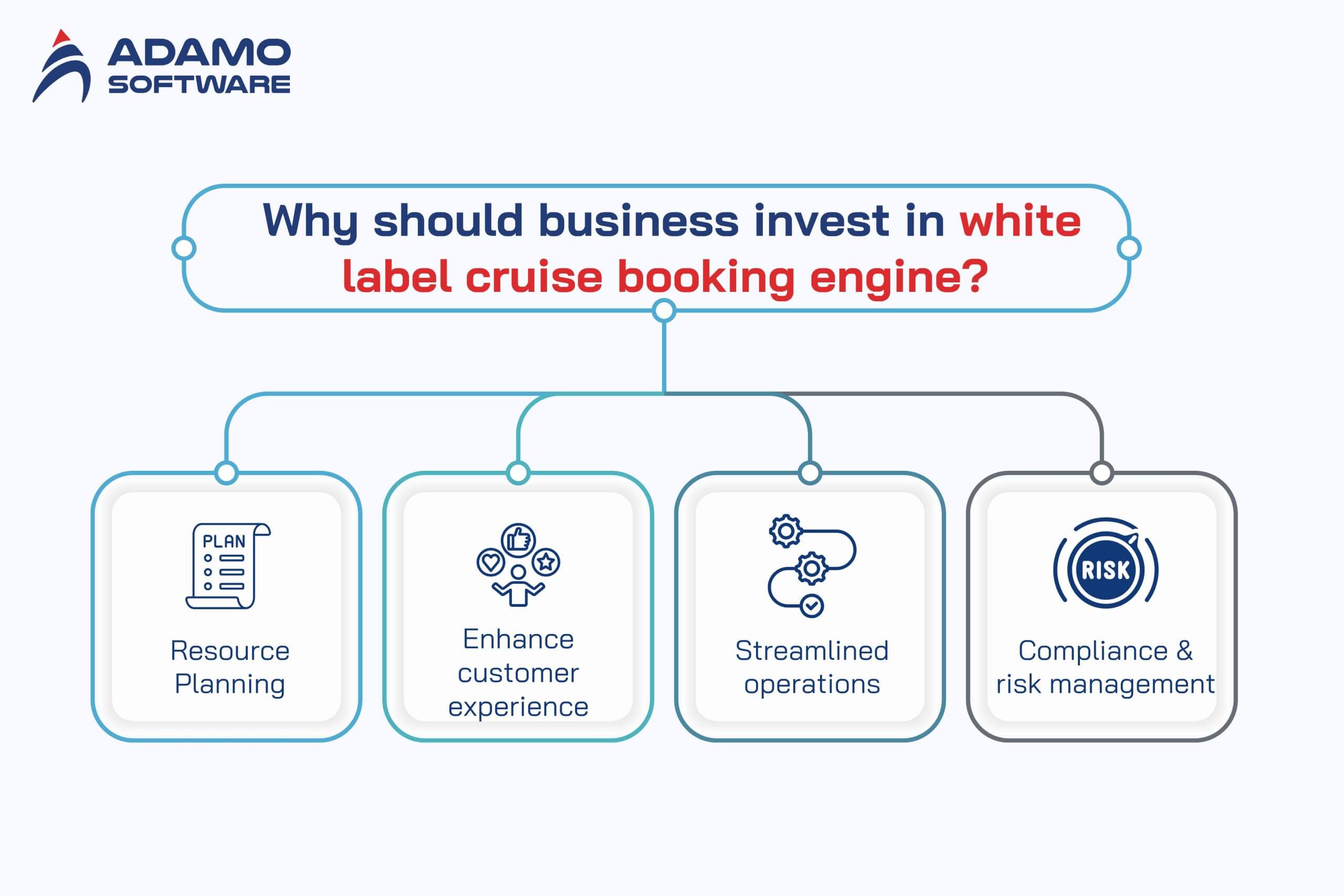
1. Resource planning
Managing a cruise is a huge task requiring many activities to work together. A reservation system gives real-time visibility across operations, from crew scheduling and inventory to cruise planning, helping you allocate resources and ensure the right staff, equipment, and supplies at the right time.
2. Enhanced customer experience
Customer needs do not stop at booking; travelers want smooth service throughout the journey. With features such as customer profiles, preferences, and communication tools, the system lets you personalize service for each guest and deliver a seamless experience.
3. Streamlined operations
A reservation system automates and streamlines operational processes, reducing manual errors and freeing staff to focus on service. It can also support financial management and compliance tracking, making operations more efficient, which is why the right development partner matters.
4. Compliance and risk management
Staying current with industry regulations takes time and resources. A cruise reservation system can integrate safety checks, incident reporting, and risk management features, helping you manage and mitigate potential risks.
Read more: Cruise booking engine: essential features for a successful system.
III. Must-have features of a cruise reservation system
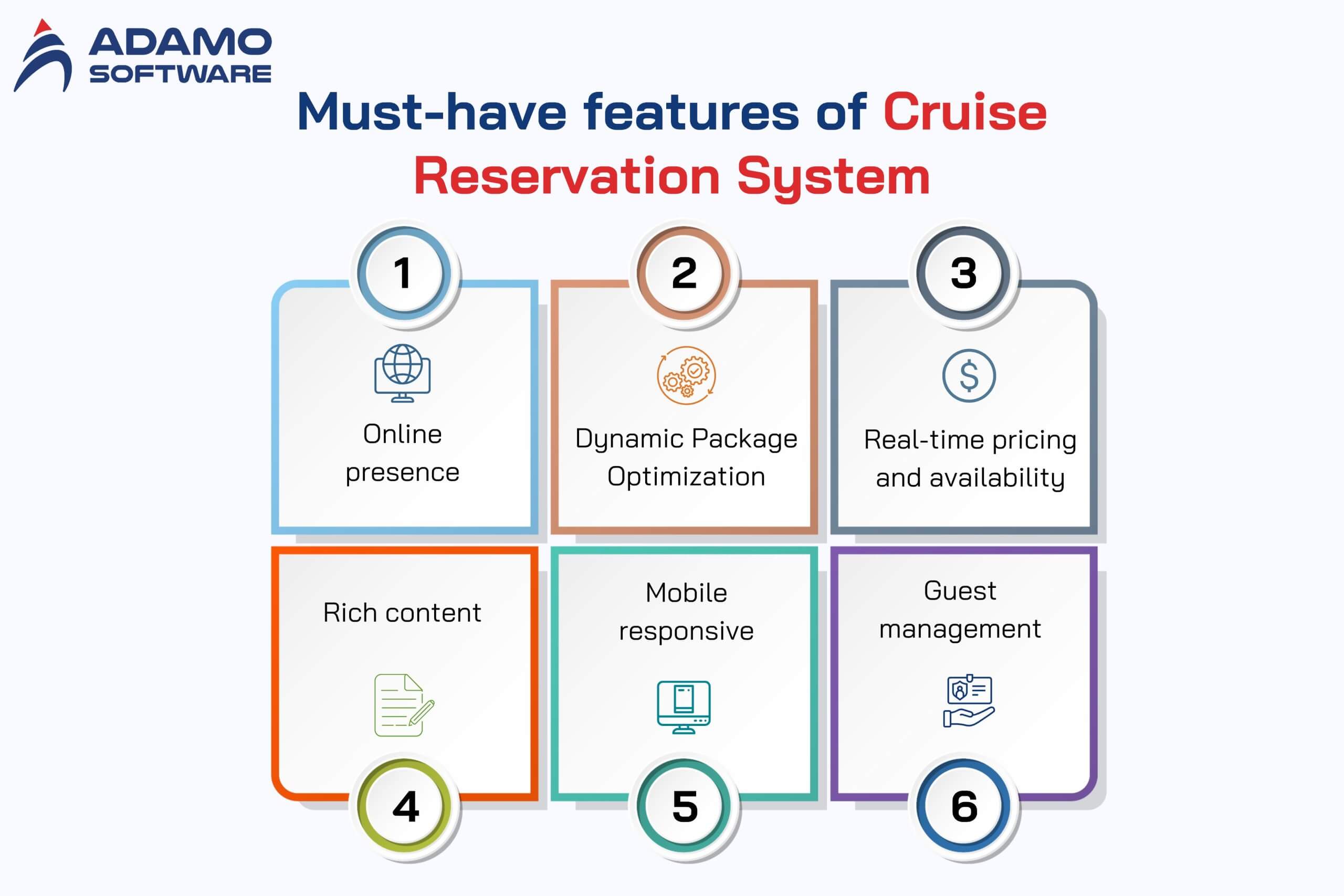
- Online presence: Agents and consumers expect a clear, comprehensive online portfolio, so the system must present cruises fully and take advantage of the digital shift.
- Dynamic package optimization: Integrate multiple cruise lines and bundle services such as flights and hotels, with dynamic bundling to stay ahead of competitors.
- Real-time pricing and availability: Provide live pricing and availability through a cruise API, with control over selling price and the ability to promote cruise-line discounts.
- Rich content: Offer detailed descriptions of cruise lines, ships, and cabins, with cabin and ship photos and deck layouts so users can browse public areas and rooms before booking.
- Mobile responsive: Design for every screen size so travelers can research and complete bookings any time, on any device.
- Guest management: Maintain detailed guest profiles (contact details, dietary needs, preferences), integrate onboard systems such as room keys and dining, and collect post-cruise feedback.
IV. Step-by-step guide to cruise reservation system development
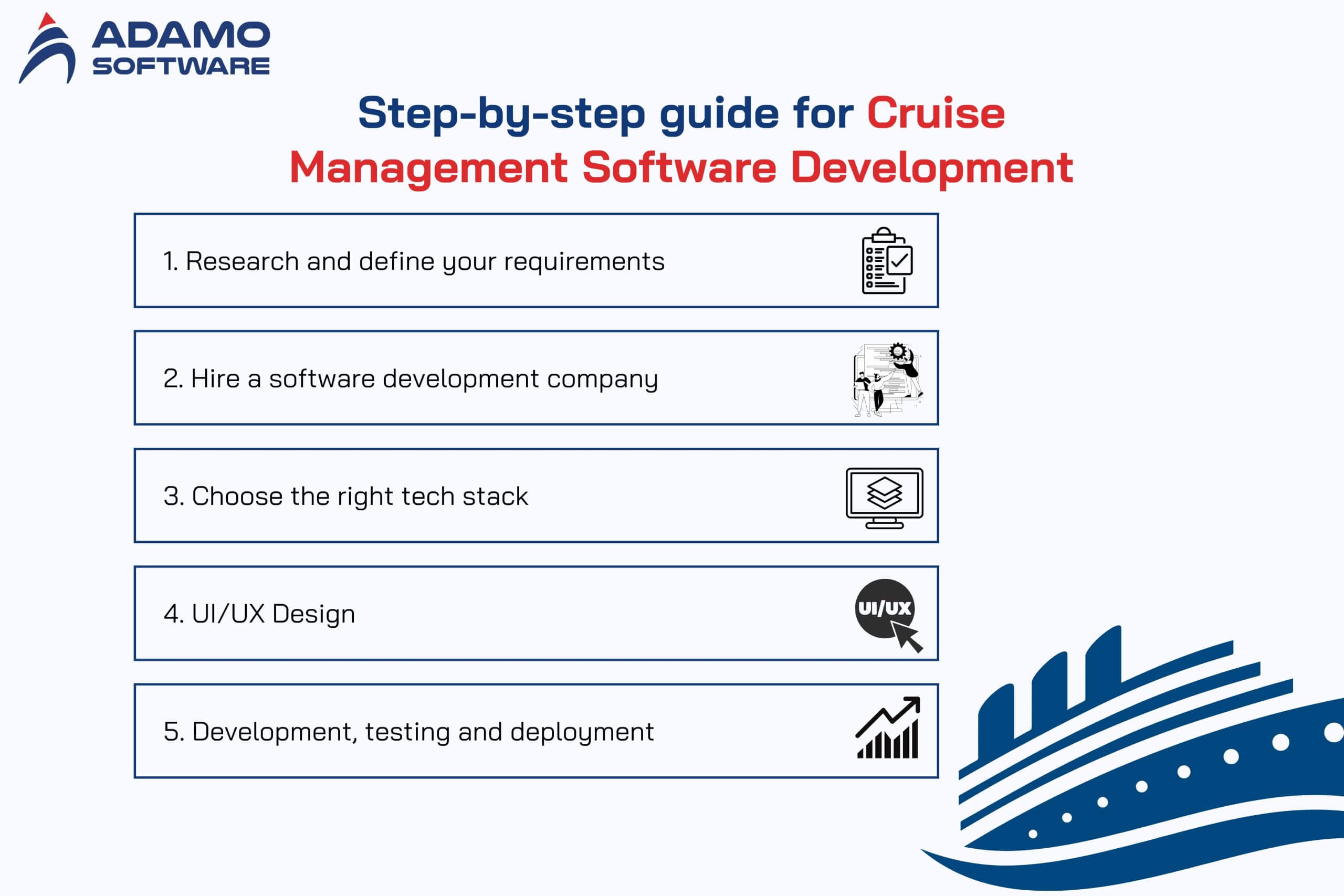
1. Research and define your requirements
Be precise about your requirements so you can make the right decisions. Research the market (latest trends, models, and technologies competitors use) and your target audience’s needs, since trends change constantly and you want long-term success from this investment. If in-house research is a stretch, Adamo Software’s experts can help you identify the right trends and technologies and define your project scope.
2. Choose a development partner
Building an in-house team means hiring, training, and setting up technology from scratch, which lengthens timelines and strains budgets. Freelancers may not keep up with the latest tools and trends. The ideal solution is a specialized dedicated development team with cruise and travel experience.
3. Choose the right tech stack
Your team should select technologies that fit the project. Common choices include:
- Programming languages: Backend (Java, Python, Node.js); Frontend (JavaScript, HTML, CSS).
- Frameworks: Backend (Spring Boot, Django, Express.js); Frontend (React, Angular, Vue.js).
- Databases: RDBMS (PostgreSQL, MySQL, Oracle); NoSQL (MongoDB, Cassandra, Redis).
- Cloud: AWS, Microsoft Azure, Google Cloud Platform.
- Containerization: Docker, Kubernetes.
- APIs: RESTful API, GraphQL.
- Security: OAuth 2.0, JSON Web Tokens (JWT), SSL/TLS.
- Analytics and BI: Apache Spark, Elasticsearch, Kibana; Tableau, Power BI.
- DevOps: Git/GitHub/GitLab; Jenkins, GitLab CI/CD; Prometheus, Grafana, ELK Stack.
4. UI/UX design
With the stack chosen, focus on UI/UX design that meets user expectations and drives engagement, since a clear, intuitive interface is what keeps travelers booking.
5. Development, testing, and deployment
With the team, stack, and resources in place, begin development. Test thoroughly to find and fix bugs across all functionality before deployment, so make sure your development partner provides robust testing techniques.
V. Why choose Adamo Software for cruise reservation software development
At Adamo Software, we have extensive experience developing travel booking systems, offering customized solutions, modern technology, agile delivery, and quality assurance. With features like real-time bookings and detailed analytics, our team builds solutions that optimize performance, and we follow strict security standards to keep your data safe. We also build broader online booking engine solutions across travel products. If you are looking for a reliable partner for your cruise reservation project, contact us for a free consultation.
FAQs for Cruise Reservation Systems
1. What is the difference between a cruise reservation system and a cruise booking engine?
The booking engine is the customer-facing part that handles search, comparison, and reservation. The reservation system is the broader platform that also manages inventory, guest data, operations, and compliance around it.
2. How long does it take to build a cruise reservation system?
It depends on scope and integrations. A common approach starts with an MVP covering search, booking, and payment, then expands to guest management and analytics in phases, with most custom builds delivered over a few months.
3. Can it integrate with multiple cruise lines?
Yes. Through a cruise API, the system connects to multiple cruise lines and suppliers, syncing real-time inventory, pricing, and availability so agents and travelers can compare and book across lines.

 adamosoft.com
 (+84) 373 11 44 88