
Cruise booking engine: Essential features for a successful system
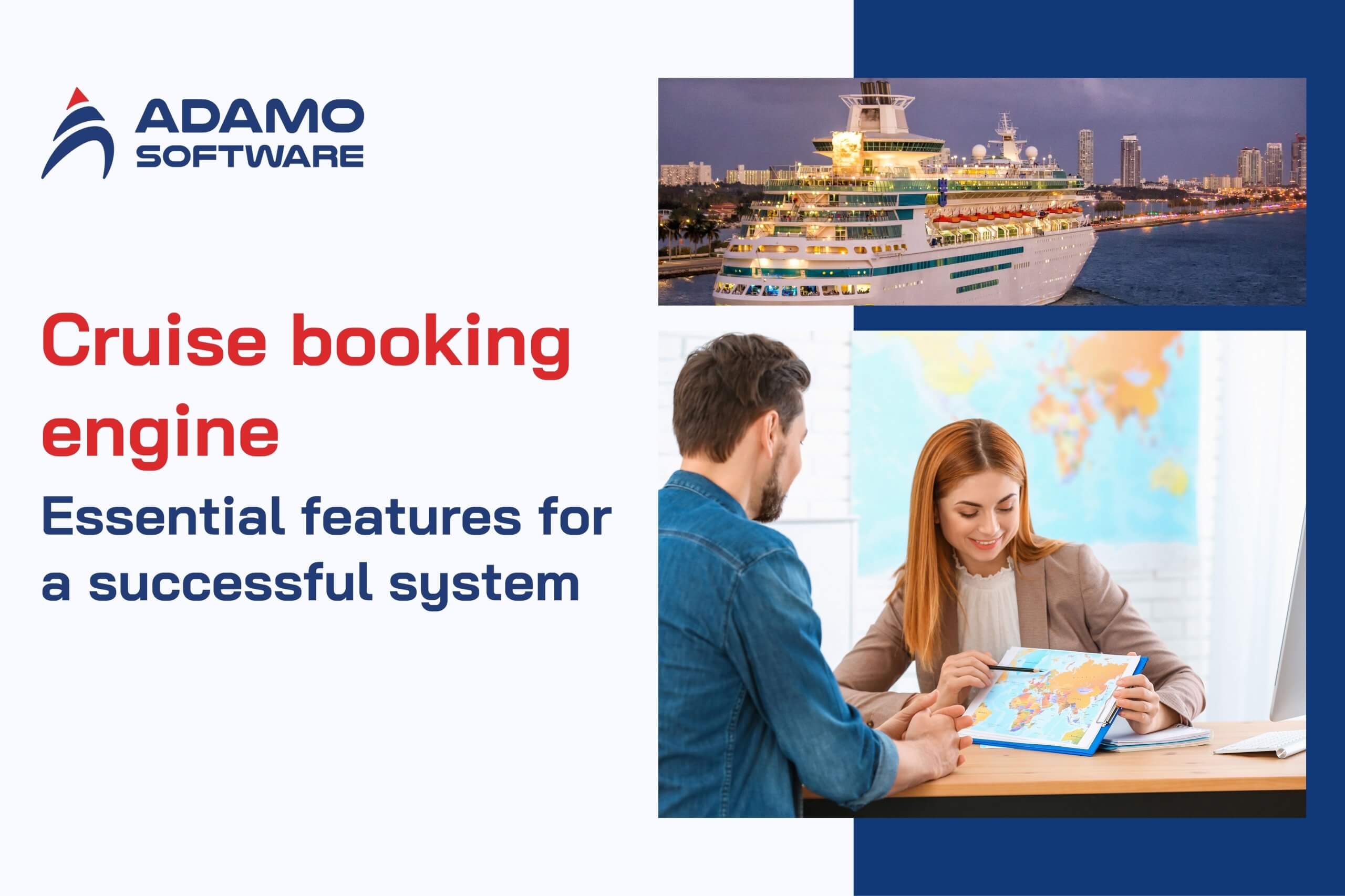
Cruising is one of travel’s fastest-growing segments. A record 37.2 million people took a cruise in 2025, up from 34.6 million in 2024, and the figure is forecast to reach 41.9 million by 2028 (CLIA, 2026). With about a third of cruisers now under 40 and roughly a third of sailings multigenerational, travelers expect seamless, mobile-first booking. A cruise booking engine is the tool that delivers it: a system that ensures smooth bookings and a strong customer experience, integrated with a user-friendly interface, dynamic schedule management, secure payments, and marketing tools.
This post gives an overview of the cruise booking engine, how a cruise booking solution works, the must-have features, and the vital role of API integration.
Key Takeaways:
- A cruise booking engine lets travelers search, compare, and book cabins online, connecting cruise lines, payments, insurance, and shore excursions in one platform.
- Cruising hit a record 37.2 million passengers in 2025 and is forecast to reach 41.9 million by 2028 (CLIA, 2026), with about a third of cruisers now under 40, raising demand for mobile-first booking.
- Online sales still lag the rest of travel: offline channels accounted for over three-quarters of cruise sales in 2025 (Statista, 2025), leaving a large opportunity for direct online booking engines.
- Must-have features include a mobile-friendly interface, secure PCI DSS payments, data analytics, and emerging tech such as IoT, biometrics, and VR/AR cabin previews.
- API integration is the backbone, syncing real-time pricing, availability, and add-ons across cruise lines, payment gateways, and partners.
I. An overview of the cruise booking engine
A cruise booking engine is an online system that lets travelers search, compare, and book cabins on a cruise. It integrates with tourism management services to deliver a comprehensive experience, from choosing schedules and cabins to add-ons.
1. The role of the cruise booking engine in the travel industry
The engine connects travel agents and cruise companies with customers, automating operations and optimizing revenue. It helps businesses expand into new markets, manage data more efficiently, and personalize services to attract and retain customers. There is real headroom here: offline channels still accounted for over three-quarters of cruise sales in 2025 (Statista, 2025), so a strong direct booking engine is a clear competitive opportunity. It gives travelers complete access to availability, deck rates, and booking options in a single platform.
2. Trends in developing a cruise booking engine
As technology evolves, the engine must follow the latest trends. AI and machine learning integration is now common, helping companies predict customer needs and personalize experiences. Businesses increasingly build a mobile app alongside the website for flexible booking, and social media integration has become indispensable for online promotion and engagement, especially given the younger cruise demographic.
3. The benefits of using a cruise booking engine
For businesses, the system reduces operating costs, increases market reach, and improves data management. For customers, it saves time, makes price comparison easy, and helps them choose a suitable cruise more confidently.
II. How does a cruise booking solution work?
The cruise booking engine books cruises and manages every aspect of the journey, connecting cruise providers with customers, processing payment, and integrating add-ons. Here is how it works step by step.
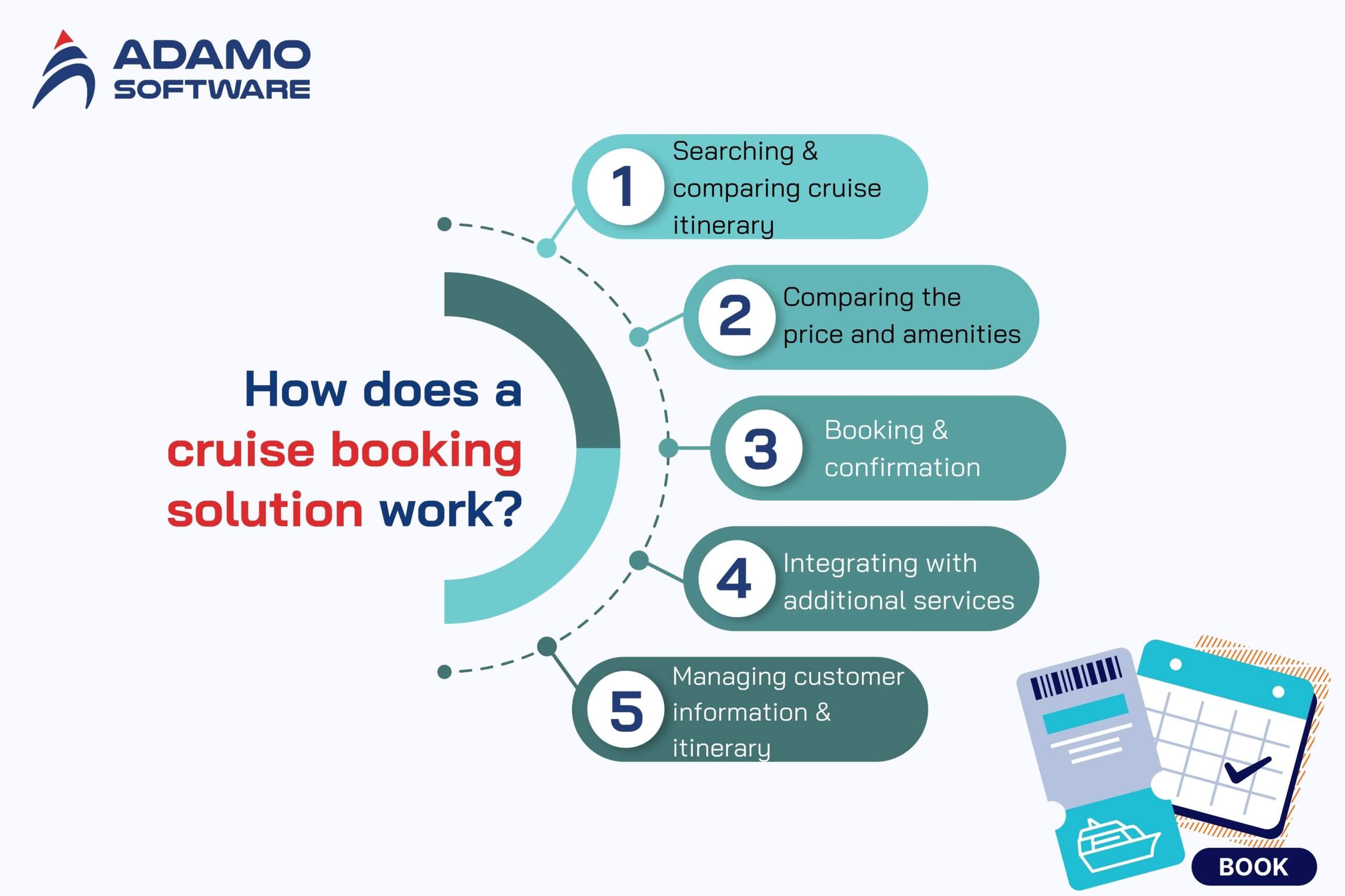
1. Searching and comparing the cruise itinerary
Customers enter details such as departure date, destination, budget, and preferences, and the system displays suitable cruises from real-time data, with images, descriptions, and the itinerary so travelers understand the journey.
2. Comparing price and amenities
Travelers compare prices of different cruises on the same itinerary and departure to fit their budget. The system also shows amenities (cabin type, dining, onboard entertainment, incentives) and reviews from past customers, increasing trust and transparency.
3. Booking and confirmation
Once a cruise is chosen, the engine collects personal details and processes online payment, then immediately sends a booking confirmation to the customer’s email or phone with all journey information.
4. Integrating additional services
Customers can add services such as travel insurance, shore tours, or cabin upgrades. Some systems offer premium packages (dining, spa, entertainment) with clear pricing, and synchronize these add-ons to the itinerary, helping companies raise satisfaction and revenue.
5. Managing customer information and itinerary
Customers log in to view booking details, itineraries, and registered services, and receive departure times, updates, and suggestions by email or message. For companies, the system tracks customer behavior to inform promotions and upgrades, improving experience, efficiency, and strategic planning.
Read more: Cruise reservation system: what it is, why it matters, and development tips.
III. Must-have features for an effective cruise booking engine

- User-friendly interface: Filters, clear navigation, and visuals help customers find and book easily, while letting businesses monitor and update data in real time.
- Mobile-friendly design: Search filters, images, and pricing must display cleanly on small screens, with a fast, smooth interface, since a large share of bookings now happen on mobile.
- Secure payment gateway: Offer multiple options (cards, e-wallets, international methods) with modern encryption and PCI DSS compliance to protect payment data and build trust.
- IoT integration: Connect smart onboard devices so guests can check cabin status, adjust temperature, and track the ship, while the system uses IoT data to personalize services.
- Data analysis and reporting: Detailed reports on sales, customer behavior, and marketing effectiveness help businesses optimize operations and find revenue opportunities.
- Biometric identification: Fingerprint and facial recognition speed up login, payment, and boarding while strengthening security.
- VR and AR: VR lets travelers tour ships or cabins before booking, and AR overlays details when scanning a ship or cabin, helping customers decide with confidence.
IV. The vital role of API integration in cruise booking
API integration connects different services and streamlines operations. An Application Programming Interface lets systems share information and deliver accurate, timely data to customers. Here is why it matters.
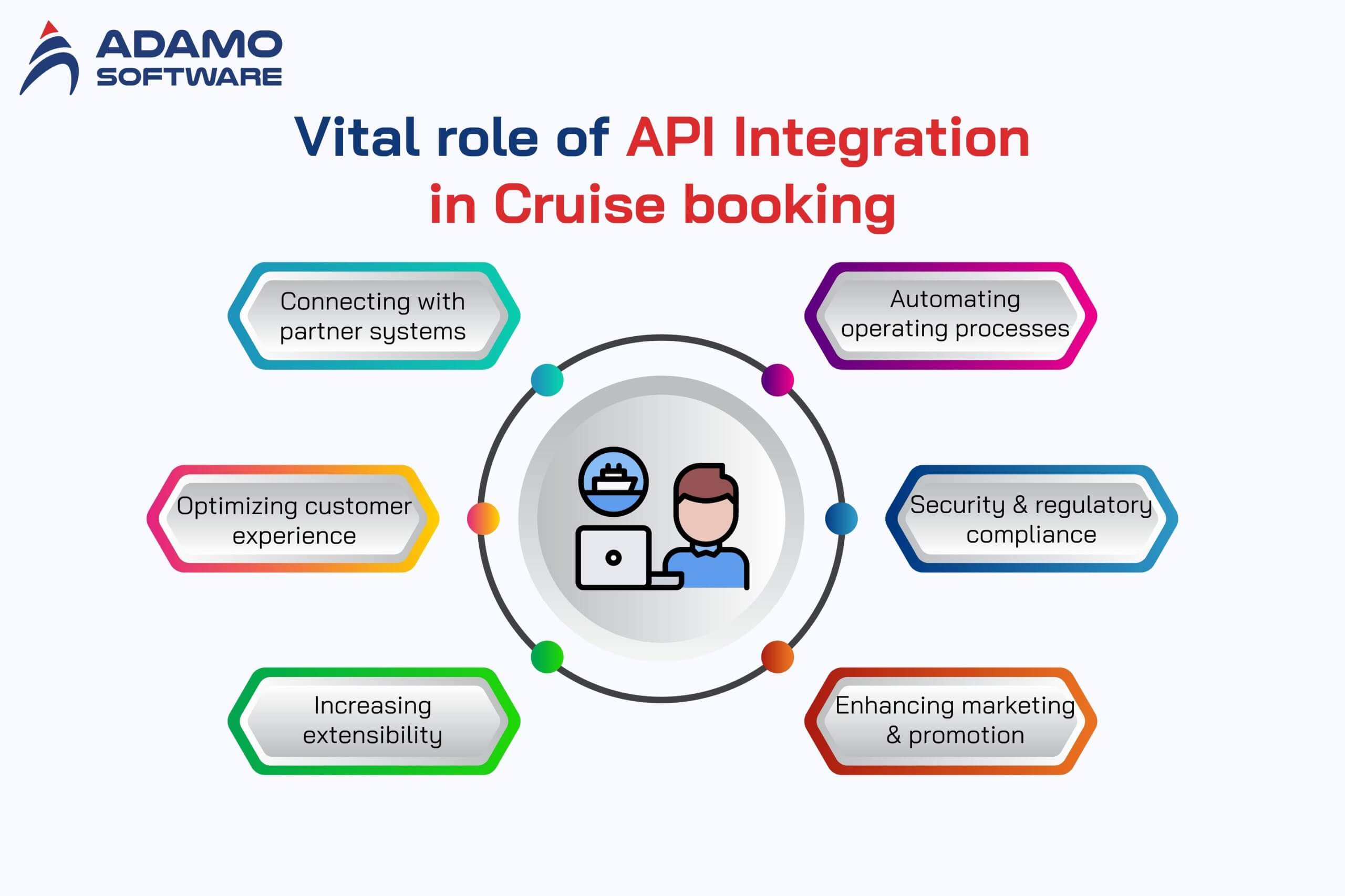
- Connecting partner systems: APIs link the engine with cruise lines, payment gateways, insurance, and tour providers, syncing real-time prices, availability, and services so customers can compare and choose accurately.
- Optimizing customer experience: The engine can query payment services, send email or SMS confirmations, and suggest options based on booking history, with seamless integration into mobile apps.
- Increasing extensibility: APIs let you add new services (premium dining, special tours, port transfers) without changing the system’s core structure, so you react quickly to market shifts.
- Automating operations: APIs automate payment confirmation, notifications, and updates to sailing schedules and cabin status, reducing errors and cutting operating costs.
- Security and compliance: Payment and security APIs enable data encryption and protect personal and payment information, helping maintain compliance and customer trust.
- Enhancing marketing: Connecting marketing and social platforms via API automates promotions by email, SMS, or push, targeting past and prospective customers to lift conversions.
For a broader look at how this technology is built across hotels, flights, and travel, see our guide to the online booking engine. If you also sell shore experiences, our activity booking software guide is a useful companion.
V. Why choose Adamo Software to develop your cruise booking engine

If you want to turn a cruise booking engine idea into reality, Adamo Software can be your trusted partner. As one of Vietnam’s leading travel and hospitality software developers, we deliver quality products built around your needs.
- Experience and expertise: Our developers have built travel and cruise booking systems and work with advanced technologies such as API, IoT, VR, AR, and security.
- Custom, flexible solutions: We design a booking system that fits your business model, from basic features to payment integration, customer support, and personalization.
- Security and compliance: We use advanced security and comply with international standards such as PCI DSS to protect payment and personal data.
- Optimized user experience: We design intuitive, user-friendly interfaces across desktop and mobile so customers search, book, and manage journeys easily.
- Ongoing support and maintenance: Our team keeps the system running smoothly after launch, resolving issues and optimizing as needed.
FAQs for Cruise Booking Engines
1. Can a cruise booking engine integrate with my existing travel portal?
Yes. Most cruise booking systems, including those built by Adamo Software, integrate with existing travel portals through API connections, syncing itineraries, cabins, and payments while keeping your branding and user flow. An outsourcing development partner ensures smooth integration, consistent UX, and long-term API maintenance.
2. How long does it take to build a cruise booking engine?
It depends on scope and integrations. A common approach starts with an MVP covering search, booking, and payment, then expands to add-ons, IoT, or VR/AR in phases, with most custom builds delivered over a few months.
3. What is the difference between a cruise booking engine and a cruise reservation system?
The booking engine is the customer-facing part that handles search, comparison, and reservation, while the reservation system is the broader platform that also manages inventory, operations, and back-office functions around it.

 adamosoft.com
 (+84) 373 11 44 88