
Online tour booking software: Features, Benefits & Best options
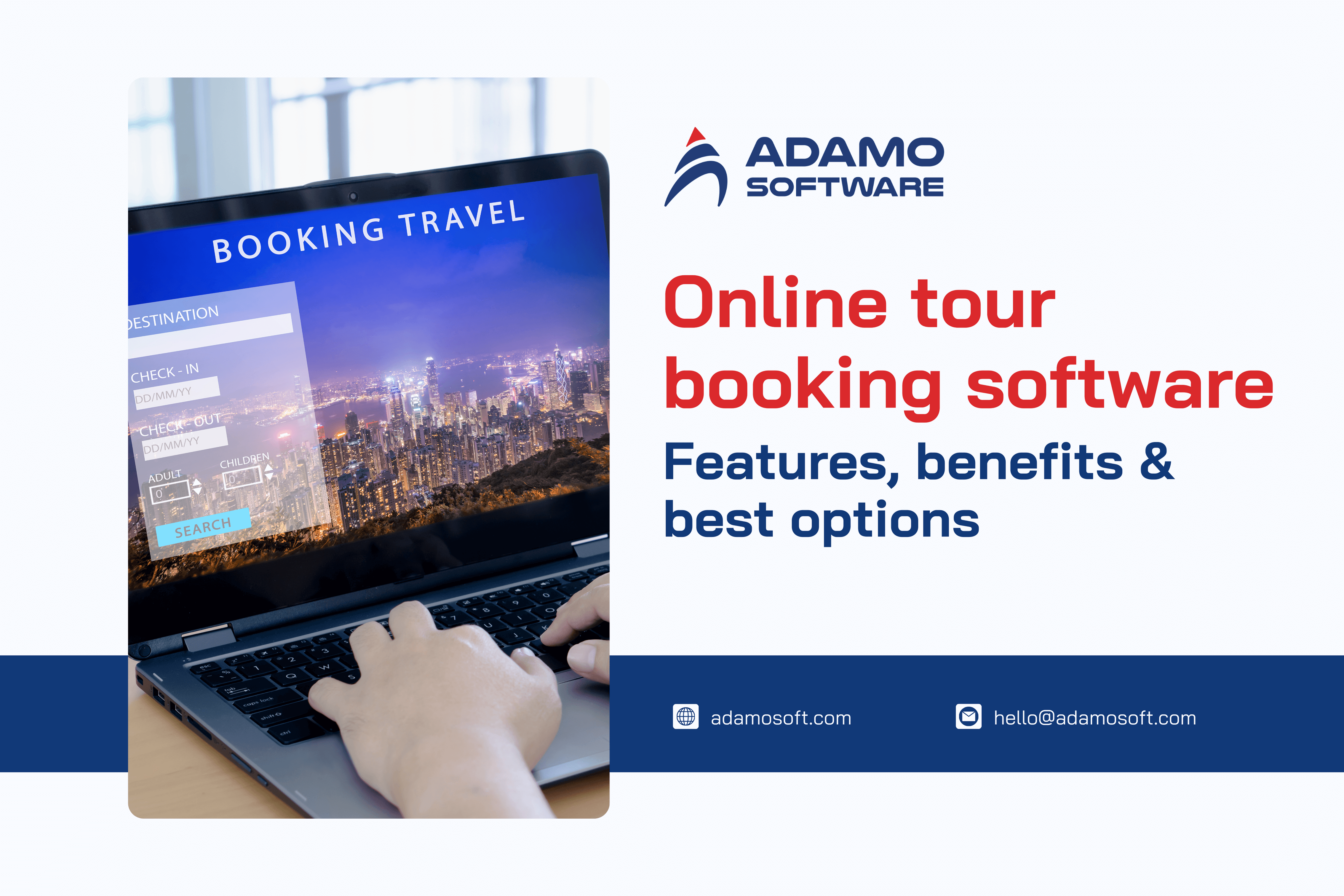
Online tour booking software in 2026: what it does, the features that matter, off-the-shelf platforms versus a custom build, and how to choose the right system for your tour business.
Online tour booking software is the platform tour and activity operators use to manage reservations, payments, real-time availability, and customer data in one place, instead of juggling phone calls, spreadsheets, and email. It matters more than the niche label suggests: the tours, activities, and attractions sector reached 271 billion USD in gross booking value in 2025 and is on track for 342 billion USD by 2029, making it the third-largest travel sector after flights and hotels, and the least digitized of the three (Phocuswright and Arival, 2026).
That gap is the opportunity. Online bookings for experiences grew from 17% of transactions in 2019 to 33% in 2025 and are forecast to reach 43% by 2029. Operators who get their booking technology right are capturing that shift; those still on manual processes are losing it. This guide explains what online tour booking software does, the features that actually matter, the trade-off between off-the-shelf platforms and a custom build, and how to choose.
Key Takeaways:
- The tours, activities, and attractions sector reached 271 billion USD in gross booking value in 2025 and is projected to hit 342 billion USD by 2029. It is the third-largest travel sector after flights and hotels, and the most under-digitized (Phocuswright and Arival, 2026).
- Online bookings for experiences nearly doubled from 17% of transactions in 2019 to 33% in 2025, and are forecast to reach 43% by 2029 (Phocuswright and Arival, 2026). The shift to digital booking is still in early innings.
- The market is fragmented: the average tour operator runs the business across five separate systems (booking engine, email, spreadsheet, messaging app, accounting), and more than 300 booking systems exist globally (Arival, 2026).
- Booking software is a profitability differentiator. Among profitable operators, 66% use a booking system, versus 40% of unprofitable ones (Arival Profitable Operator Report, 2026).
I. What Is Online Tour Booking Software and How Does It Work?
Online tour booking software is a digital system that automates the reservation process for tour and activity businesses. A customer browses available tours on your website or app, selects a date, and books and pays in a few clicks. The software instantly updates availability, sends a confirmation, and records the customer in your database, with no staff intervention required.
Behind the scenes it handles scheduling, pricing rules, promotions, and capacity, and it connects to your website, mobile app, and third-party distribution channels such as Viator, GetYourGuide, and Tripadvisor. For the operator, that means fewer manual steps and fewer errors. For the customer, it means booking on their own schedule, day or night.
II. Why Tour Operators Need It
The case for adopting booking software is no longer aspirational, it is measurable. According to Arival’s 2026 Profitable Operator Report, 66% of profitable tour operators use a booking system, compared with just 40% of unprofitable ones. Booking technology, multi-channel distribution, and digital marketing are the clearest separators between the two groups.
The reasons are practical:
- Customers expect instant booking. Most travelers now prefer to book and pay online rather than call or email, and they will choose a competitor who offers it.
- Manual processes do not scale. Phone-and-spreadsheet operations break down past a certain volume. The profitability sweet spot for tour businesses sits between roughly 1,000 and 50,000 guests a year, a range manual methods cannot handle cleanly.
- Fragmentation is expensive. The average operator runs five disconnected systems. Each handoff between them is a chance for a double booking, a missed reservation, or a data error.
III. The Tour Software Market in 2026
The dedicated tour operator software market is valued at roughly 0.9 billion USD in 2026 and is growing at a double-digit CAGR toward about 1.33 billion USD by 2030 (The Business Research Company, 2026). Growth is driven by the digitization of travel, the rise of cloud-based platforms, and AI features such as automated confirmations, dynamic pricing, and demand forecasting, which can reduce manual workload significantly.
The market is also notably fragmented. With more than 300 booking systems available and no dominant winner, operators face a real selection problem, which is exactly why understanding the feature set and the build options below matters before you commit.
IV. Essential Features of Online Tour Booking Software
A strong system combines customer-facing convenience with back-office control. The features that consistently matter:
- Real-time availability and instant booking. Live inventory so customers can confirm a spot immediately, which prevents both double bookings and missed reservations.
- Secure payment processing. Integrated, PCI-compliant gateways supporting cards, PayPal, and digital wallets, so customers transact with confidence and operators are protected from fraud.
- Mobile-first experience. With well over half of experience bookings now coming from phones, the booking flow has to work cleanly on mobile, not just desktop.
- Channel and OTA distribution. Connections to Viator, GetYourGuide, Tripadvisor, and your own website, so you sell everywhere from one inventory.
- Customizable booking rules. Flexible pricing, group discounts, add-ons, and capacity rules that adapt to how your specific tours run.
- CRM and customer management. A record of every customer and booking, enabling follow-ups, reminders, and targeted promotions that drive repeat business.
- Reporting and analytics. Dashboards on booking trends, sales, and customer preferences to guide pricing and marketing decisions.
- Multi-currency and multi-language support. Essential if you serve international travelers, removing friction at the point of payment.
Notice that features and benefits are two sides of the same coin: real-time availability is a feature, and the revenue it captures by converting browsers into instant bookings is the benefit. Evaluate any platform on what each capability actually does for your operation, not on the length of the feature list.
V. Off-the-Shelf Platforms vs a Custom Build
Most operators start with an off-the-shelf platform, and for standard needs that is the right call. The leading options each have a niche:
| Platform | Typically best for | Distribution focus |
|---|---|---|
| FareHarbor | Larger operators wanting deep features | Expedia, Viator |
| Rezdy | Independent and growing operators | Viator, GetYourGuide |
| Checkfront | Small to mid-size businesses | Tripadvisor |
| Bokun (Tripadvisor) | Multi-channel distribution | Viator and broad channel network |
| TrekkSoft | Adventure and activity tours | Viator, Expedia |
These platforms are well-built and cost-effective for common workflows. The limits show up when your business outgrows them: when you need to unify the five disconnected systems most operators run, integrate with a specific accounting or CRM stack, support an unusual pricing or itinerary model, or remove the per-booking commissions that marketplace-linked tools charge. At that point, a custom or semi-custom build, often combining your own booking engine with selective integrations, becomes the more economical and scalable path. The decision is not off-the-shelf versus custom in the abstract; it is which one fits your volume, your margins, and your workflow.
VI. How to Choose the Right System
A practical shortlist process:
- Map your actual workflow first. List how bookings, payments, scheduling, and customer follow-up happen today, and where the manual breakages are. That list is your requirements.
- Match to volume and margin. A small operator may be well served by a subscription platform; a high-volume business losing 15 to 30% in marketplace commissions may save money with a custom booking engine.
- Check integrations and ownership. Confirm the system connects to your existing tools and that you own your customer data, rather than renting access to it.
- Plan for mobile and international. Verify the mobile booking flow and, if you serve overseas travelers, multi-currency and multi-language support.
VII. Build Your Online Tour Booking Platform with Adamo Software
Adamo Software is a Vietnam-based travel and hospitality software development company that builds booking and operations platforms for tour and activity operators. We work with operators across the experiences sector, from adventure-tour and activity businesses to ballooning and guided-experience companies, building custom systems under NDA.
Where off-the-shelf tools stop, we start: unifying fragmented systems into one platform, integrating booking engines with payment, CRM, and OTA channels, and building the custom pricing, scheduling, and itinerary logic that packaged software cannot match. The result is a system you own, tailored to how your tours actually run, designed to scale with your guest volume rather than cap it. If you are weighing a custom build against your current setup, the practical next step is a scoped conversation about your workflow, your volume, and where your existing tools fall short.
For a related view of platform-style travel products, see our guide to building a SaaS booking system.
Conclusion
Online tour booking software has moved from a nice-to-have to a profitability differentiator, in a 271 billion USD sector that is still early in its shift to digital. Start by mapping your real workflow, choose a system that fits your volume and margins rather than the longest feature list, and weigh off-the-shelf convenience against the ownership and integration a custom build provides. Get that decision right and your booking system stops being overhead and becomes the engine of your growth.

 adamosoft.com
 (+84) 373 11 44 88