
AI in Healthcare Compliance: Why automation alone still fails
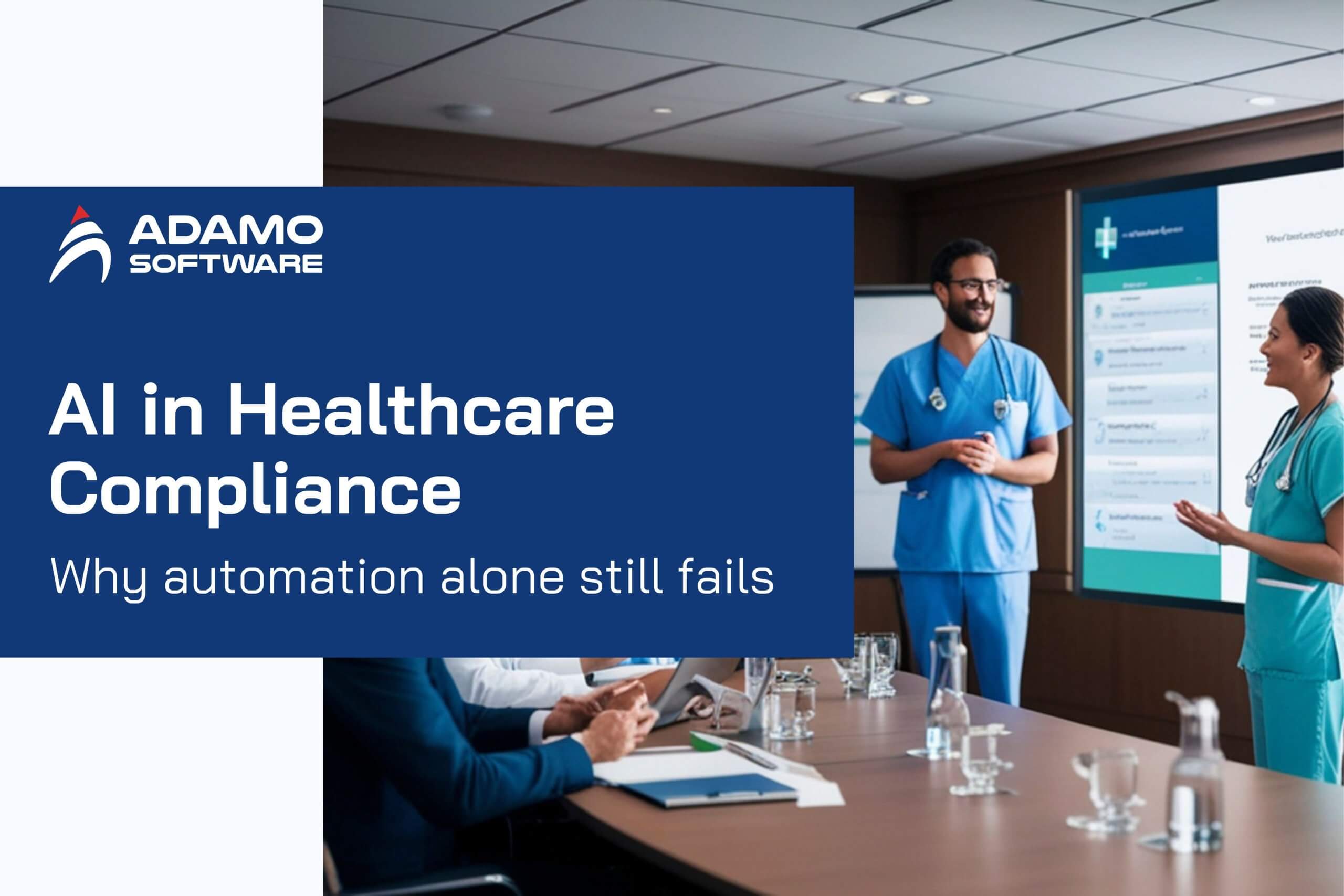
AI can detect risk, but it cannot ensure compliance. Learn why most healthcare AI systems fail audits and how to design compliance-first architectures that truly work.
AI in healthcare compliance refers to the use of machine learning and automation technologies to help healthcare organizations meet regulatory requirements such as HIPAA, GDPR, and healthcare data security standards. These systems can analyze logs, detect anomalies, flag compliance risks, and streamline reporting across clinical and administrative workflows.
On paper, this sounds like the ultimate solution to rising compliance costs and regulatory complexity.
In reality, many healthcare providers still fail audits even after deploying AI tools.
Because compliance is not a data problem. It is a governance problem.
AI can detect risks.
But without the right architecture, accountability, and human oversight, it simply creates more alerts — not more compliance.
At Adamo, we see this gap clearly when working with healthcare platforms that have already “added AI,” but still struggle to pass security reviews, regulatory audits, or data protection assessments.
I. Applications of AI in Healthcare Compliance
AI technologies are increasingly being integrated into healthcare compliance processes, transforming the way organizations monitor, manage, and maintain regulatory standards. The applications of AI in this sector are varied and impactful, ranging from billing compliance to predictive analytics.
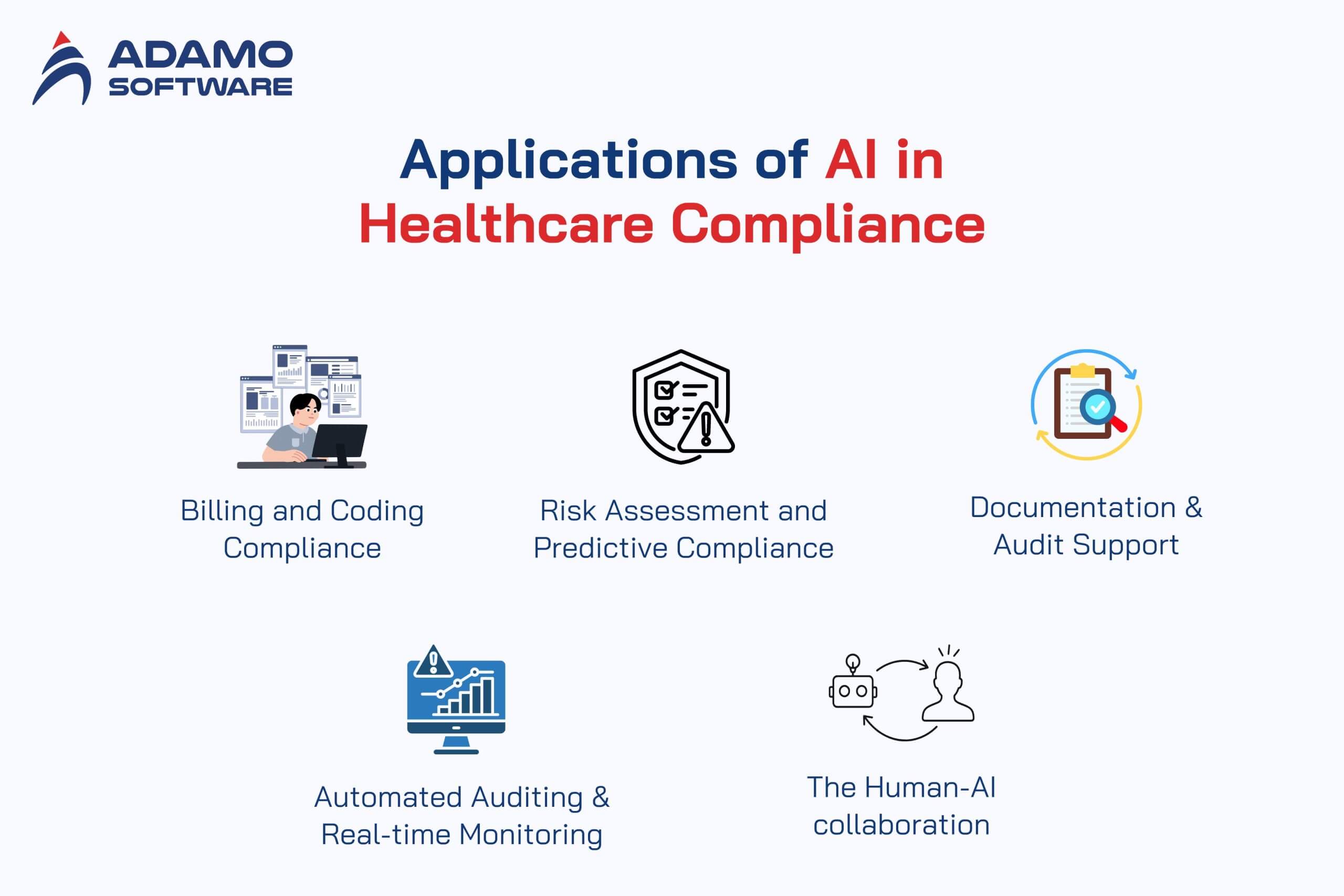
1. Billing and Coding Compliance
Accurate billing and coding are essential for financial stability and regulatory compliance in healthcare. AI-assisted claims verification tools analyze medical data and clinical documents to ensure that billing codes align with the services provided. This capability reduces the risk of fraud, waste, and abuse within healthcare payments by flagging suspicious claims, detecting duplicate submissions, and minimizing errors that could lead to violations of the False Claims Act.
As a result, healthcare providers experience fewer denied claims and lower audit risks, thereby enhancing financial transparency
2. Risk Assessment and Predictive Compliance
AI also plays a significant role in risk assessment and predictive compliance. Utilizing machine learning and natural language processing, AI systems can rapidly process vast amounts of healthcare data to identify patterns and flag potential compliance risks more efficiently than traditional methods.
This proactive approach enables organizations to navigate complex regulations such as HIPAA and FDA guidelines, ensuring continuous adherence while safeguarding patient safety. By automating compliance checks and early detection of potential violations, healthcare providers can streamline their reporting processes and stay ahead of regulatory challenges.
3. Documentation and Audit Support
AI enhances documentation practices by automatically marking and categorizing relevant conversation segments, which assists in maintaining compliance with HIPAA guidelines. This is particularly critical for organizations managing electronic medical records at scale.Features such as automated timestamps and context classification improve the efficiency of external audits and reduce the likelihood of missing evidence in the event of a data breach.
Additionally, AI-supported workflows facilitate the timely storage and deletion of sensitive data, which is crucial for compliance with legal retention periods.
4. Automated Auditing and Real-time Monitoring
Automated auditing systems leverage AI to process thousands of transactions and documents simultaneously, uncovering patterns that may indicate compliance issues. These systems can detect anomalies in billing, such as unusual patterns of high-reimbursement codes, allowing organizations to investigate potential fraud before claims are submitted to payers.
Furthermore, real-time monitoring of access to electronic health records enables the detection of unauthorized access or unusual behavior, thus reinforcing patient data security.
5. The Human-AI Collaboration
Despite the advanced capabilities of AI, human oversight remains critical in the compliance process. Effective AI implementation requires a structured approach that incorporates human judgment, especially in complex cases where nuanced decision-making is necessary.
AI systems, like Censinet AI™, are designed to support compliance teams by routing identified risks to the appropriate stakeholders for review and approval. This collaboration ensures that AI serves as an aid to human decision-making, rather than a replacement.
II. Benefits of AI in Healthcare Compliance
AI is increasingly recognized for its transformative potential in healthcare compliance, offering significant advantages that enhance efficiency, accuracy, and cost savings across various operational domains.
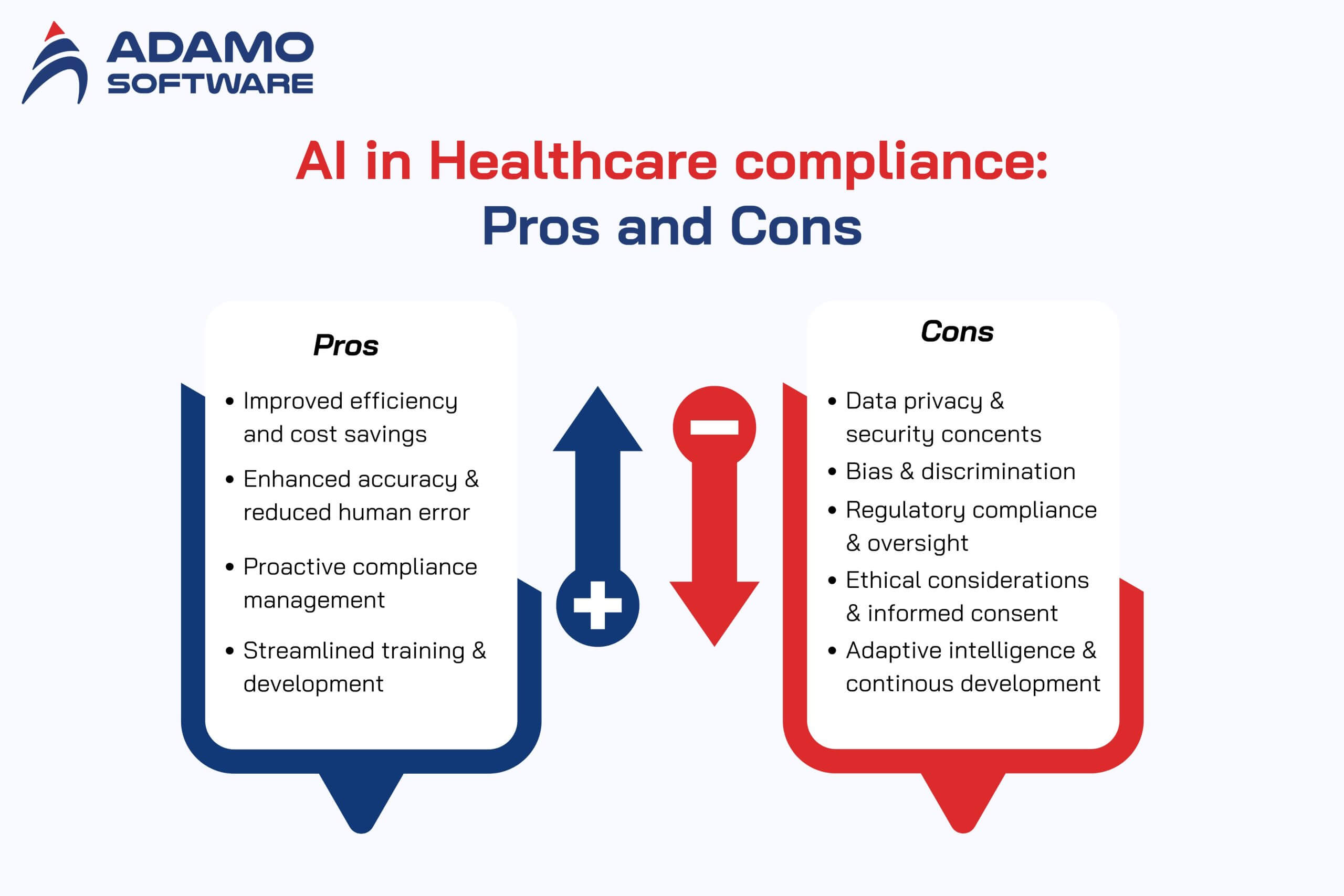
1. Improved Efficiency and Cost Savings
One of the primary benefits of integrating AI into healthcare compliance is the substantial improvement in operational efficiency. AI technologies automate tedious tasks such as audit preparation, tracking regulatory changes, and reviewing documentation. By alleviating these burdens, healthcare organizations can devote more time to patient care and strategic initiatives rather than administrative duties.
In fact, AI can reduce audit preparation time by as much as 50%, leading to significant cost savings and freeing up resources previously tied to manual compliance management. Moreover, the 2024 survey revealed that 60% of compliance professionals anticipate that AI integration will increase their yearly budgets by approximately 10% due to reduced operational costs and fewer penalties related to compliance failures.
2. Enhanced Accuracy and Reduced Human Error
AI tools enhance the accuracy of compliance processes, which is crucial in environments where human error can lead to serious regulatory breaches. For instance, AI-assisted claims verification tools check medical data to ensure billing codes accurately match the services provided, significantly mitigating the risks of fraud and abuse in healthcare payments.
These systems can identify suspicious claims, detect duplicates, and minimize unintentional mistakes, thus improving overall financial transparency and reducing audit risks for healthcare providers.
3. Proactive Compliance Management
AI enables healthcare organizations to adopt a proactive approach to compliance by using predictive analytics and machine learning. These technologies allow for real-time monitoring and assessment of compliance risks across clinical, financial, and administrative operations.
For example, AI can identify data breaches before they escalate and assist in navigating complex regulations like HIPAA, which require ongoing vigilance. This shift from reactive to proactive compliance management helps organizations stay ahead of regulatory changes and enhances patient safety and data security.
4. Streamlined Training and Development
The integration of AI also contributes to enhanced training and development within healthcare organizations. AI-assisted content creation can reduce the time and resources required to develop training materials by 50-80%.
Furthermore, personalized learning experiences powered by AI lead to a 20-40% increase in training completion rates and a 15-30% improvement in knowledge retention. This not only boosts staff satisfaction and retention but also ensures that employees are well-equipped to navigate compliance requirements effectively.
Request a Compliance Readiness Assessment
Our experts will review your current system, identify compliance gaps, and recommend a clear roadmap before you invest further
III. The real risks no compliance tool can solve for you
AI integration into healthcare compliance presents numerous challenges and limitations that need to be addressed to ensure effective and ethical use of technology.
1. Data Privacy and Security Concerns
One of the most significant challenges is the safeguarding of patient data. The reliance on large datasets for training AI systems raises serious privacy concerns, particularly when sensitive health information is involved. Many jurisdictions define “personal data” broadly, leading to potential privacy violations if data is mishandled or shared without consent. The transfer of sensitive data between institutions often lacks adequate oversight, increasing vulnerability to breaches.
Furthermore, as healthcare AI systems leverage cloud technologies, they face heightened risks of exploitation, necessitating robust cybersecurity measures and stringent regulatory compliance.
2. Bias and Discrimination
AI systems can unintentionally perpetuate bias, leading to unjust discrimination against certain protected groups. This bias can stem from the data used to train these systems, which may not represent the diversity of the population, or from the algorithms themselves, which might inadvertently favor one group over another.
Ensuring fairness and equity in AI-driven healthcare solutions is critical but challenging, as it requires continuous monitoring and validation of the underlying data and algorithms.
3. Regulatory Compliance and Oversight
The complexity of compliance in the healthcare sector adds another layer of challenge. Regulatory compliance costs the healthcare sector over $39 billion annually, with many healthcare executives expressing concern about the regulatory burden influencing their strategies.
Traditional compliance processes are often manual and prone to errors, making them less effective in the rapidly evolving regulatory landscape. AI and machine learning offer potential solutions to streamline compliance processes; however, they also introduce new layers of complexity that must be carefully managed.
4. Ethical Considerations & Informed Consent
Ethical dilemmas also arise regarding data ownership and responsibility. Clear guidelines are necessary to ensure that AI companies do not claim full ownership of patient data without appropriate consent and benefit-sharing.
Additionally, the transparency of data usage is crucial, as patients may remain unaware of how their data is utilized. The informed consent process may not adequately cover the specific or general uses of their data, leading to potential ethical violations.
5. Adaptive Intelligence and Continuous Development
Lastly, AI systems must adapt to new data and evolving healthcare environments, which presents a challenge in maintaining their efficacy and accuracy. As these systems learn from ongoing data input, there is a risk of accumulating poor or incorrect data quality, necessitating stringent monitoring and control to prevent degradation of performance over time.
Addressing these challenges will require continuous engagement from stakeholders and careful policy-making to ensure the responsible and effective use of AI in healthcare compliance.
IV. What these implementations teach (and what most teams get wrong)
Artificial intelligence (AI) has emerged as a transformative force in healthcare compliance, offering solutions that enhance operational efficiency and patient safety. Various case studies illustrate tangible improvements resulting from AI implementations, showcasing how organizations have leveraged technology to navigate the complexities of compliance while mitigating risks.
1. AI in Operational Efficiency
In numerous hospital case studies, AI has demonstrated its potential to streamline compliance processes and improve patient outcomes. Especially within modern hospital management systems, where compliance workflows span across departments. For example, AI systems can automate the monitoring of compliance with regulations such as HIPAA and the False Claims Act, enabling healthcare organizations to maintain regulatory standards more effectively.
By implementing AI tools that focus on data analysis and risk assessment, hospitals have reported a significant reduction in time spent on manual audits and claim reviews, enhancing overall operational efficiency.
2. Predictive Analytics for Risk Management
Another notable case study involves the use of predictive analytics within healthcare compliance frameworks. AI technologies analyze vast amounts of historical data to identify patterns that signal potential compliance violations before they occur.
For instance, organizations utilizing machine learning algorithms to assess billing and coding accuracy have reduced the frequency of errors and associated penalties, thereby improving both compliance and financial performance.
3. Enhancing Patient Safety
The integration of AI not only supports compliance but also prioritizes patient safety. In specific implementations, AI systems provide real-time monitoring of clinical operations, alerting teams to any anomalies that may pose risks to patient care. Such proactive measures have been linked to reductions in adverse events and improved overall healthcare delivery, illustrating the dual benefits of AI in both compliance and patient outcomes.
4. Addressing Bias in AI implementation
While the advantages of AI in healthcare compliance are clear, it is also critical to address potential biases in AI systems. Research indicates that bias can be introduced during various stages, including training data selection and model implementation. Case studies that scrutinize these biases highlight the importance of rigorous testing and validation of AI systems to ensure accurate sensitivity and specificity in compliance monitoring.
Request a Compliance Readiness Assessment
Let our experts evaluate your data flows, regulatory exposure, and system architecture before you invest.
V. What you must prepare for before regulations outpace your systems
The integration of Artificial Intelligence (AI) in healthcare compliance is expected to evolve significantly in the coming years, driven by advancements in technology and a heightened emphasis on regulatory adherence. The development of frameworks like FUTURE-AI illustrates a proactive approach to ensuring compliance, governance, and ethical considerations are embedded within AI systems from their inception. By adhering to these guidelines, healthcare organizations can effectively navigate future regulatory landscapes while prioritizing patient rights and data integrity
1. Regulatory Landscape
As AI technologies continue to proliferate, the regulatory framework surrounding their use in healthcare will likely become more robust and comprehensive. The recent Executive Order mandating AI safety and consumer protection indicates a shift towards more structured oversight in this sector.
Experts anticipate that upcoming legislation will aim to harmonize standards globally, potentially influenced by initiatives from entities such as the European Commission and the FDA, which are seeking to create a coherent regulatory approach to AI and software as a medical device.
2. Ethical Considerations
The emphasis on ethical AI use will be paramount as healthcare organizations adopt these technologies. The responsible implementation of AI necessitates a careful balance between automation and human oversight, ensuring that innovations do not compromise patient trust or safety. Stakeholders must remain vigilant about the ethical implications of AI deployments, fostering cross-sector collaborations to align incentives appropriately and address distributional concerns.
3. Technological Innovations
Emerging AI capabilities, including natural language processing, machine learning, and predictive analytics, are set to revolutionize compliance monitoring. These technologies will enhance organizations’ abilities to automate compliance checks, detect potential violations, and streamline reporting processes.
AI systems are expected to reduce human error, provide real-time insights, and improve the efficiency of compliance teams, thereby allowing healthcare professionals to focus on more critical tasks.
4. Predictive Analytics and Proactive Compliance
One of the most significant trends will be the growing reliance on predictive analytics to anticipate compliance risks before they manifest. By analyzing data patterns, AI technologies can identify vulnerabilities in processes, enabling organizations to take corrective actions early and maintain regulatory compliance. This proactive stance will not only strengthen compliance programs but also improve overall patient safety and care quality.
Conclusion: AI alone will not make you compliant

AI is transforming how healthcare organizations detect risk and automate compliance processes, but technology alone does not create regulatory confidence. True compliance is built through clear governance, accountable workflows, and systems designed to adapt as regulations evolve. Responsible AI Solutions Development in healthcare means building for auditability and long-term regulatory alignment – not just speed. AI can help you move faster, but only a compliance-first architecture will help you move safely.
If you are exploring AI in healthcare compliance or already facing audit pressure, data security reviews, or regulatory uncertainty, Adamo can help you assess your readiness, identify critical gaps, and design a scalable compliance strategy. Request a Compliance Readiness Assessment to ensure your AI initiatives strengthen your foundation instead of exposing new risks.

 adamosoft.com
 (+84) 373 11 44 88