
Machine Learning in Healthcare: What is it, benefits & use cases
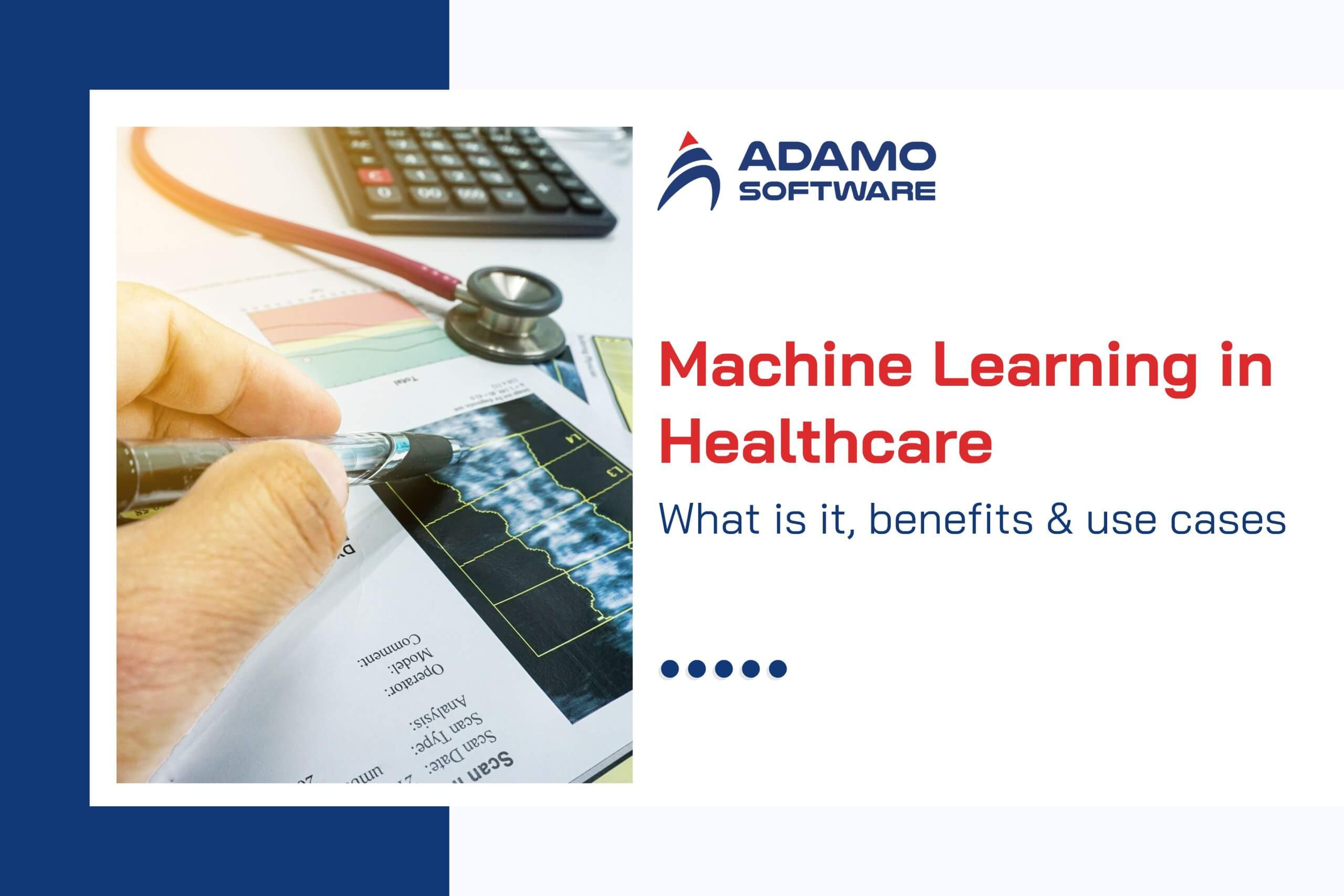
Machine learning in healthcare is projected to reach $505B by 2033. Explore how ML transforms diagnostics, drug discovery, and patient care with real use cases.
Machine learning in healthcare is no longer experimental. The global AI in healthcare market was valued at $36.67 billion in 2025 and is projected to reach $505.59 billion by 2033, growing at a CAGR of 38.9% (Grand View Research, 2025). Machine learning, the subset of AI that enables systems to learn from data without explicit programming, accounts for over 36% of the total healthcare AI market by technology segment (Mordor Intelligence, 2026). For healthcare providers, health tech companies, and software development teams, understanding where machine learning delivers measurable results is critical to making informed technology investments.
Key takeaways:
- The global AI in healthcare market was valued at $36.67 billion in 2025 and is projected to grow at a CAGR of 38.9% through 2033, with machine learning accounting for over 36% of the market by technology segment.
- ML models in clinical diagnostics regularly achieve 85-95% predictive accuracy, with applications spanning cancer detection, cardiovascular risk prediction, retinal screening, and neurosurgical decision support.
- AI-assisted drug candidates achieved an 80-90% success rate in Phase I clinical trials, roughly double the 40% success rate of traditionally developed drugs.
- 94% of surveyed medical companies reported using AI or machine learning in their operations, with predictive monitoring and administrative automation among the fastest-growing adoption areas.
- Despite the potential, 60% of ML healthcare studies still face challenges related to data quality, model interpretability, and generalizability across diverse patient populations.
- Healthcare ML projects require longer timelines and more interdisciplinary teams than general enterprise AI, due to clinical validation requirements, regulatory compliance (HIPAA, GDPR), and complex integration with legacy systems.
I. What Machine Learning in Healthcare Actually Means
Machine learning in healthcare refers to the application of algorithms that analyze medical data, identify patterns, and generate predictions to support clinical and operational decisions. Unlike rule-based software that follows pre-programmed logic, machine learning models improve their performance as they process more data.
Machine learning in healthcare operates across three primary learning types:
- Supervised learning trains models on labelled datasets (for example, thousands of annotated X-ray images) to classify new inputs. This approach powers most diagnostic imaging tools in clinical use today.
- Unsupervised learning finds hidden structures in unlabelled data, such as clustering patients by risk profile or identifying unexpected patterns in electronic health records (EHRs).
- Reinforcement learning optimizes sequential decision-making, such as adjusting treatment dosages over time based on patient response data.
The distinction between machine learning and broader artificial intelligence matters in healthcare. AI encompasses a wide range of technologies, including natural language processing (NLP), robotic process automation, and computer vision in healthcare. Machine learning is the underlying engine that powers many of these capabilities. It is the mechanism through which AI systems learn to detect tumours in MRI scans, predict patient deterioration, or identify optimal drug compounds.
II. Diagnostics and Medical Imaging
Medical imaging is where machine learning in healthcare has produced the most validated results. Deep learning models, particularly convolutional neural networks (CNNs), can analyze X-rays, CT scans, MRIs, and pathology slides to detect abnormalities that are difficult for human clinicians to identify consistently under time pressure. For a deeper look at specific diagnostic applications, see our guide on machine learning for medical diagnosis.
Neural network models and ensemble methods such as Random Forest and XGBoost regularly achieve predictive accuracies between 85% and 95% in clinical studies (ScienceDirect, 2025). In one Stanford-led study, an AI system outperformed the average radiologist in diagnosing pneumonia from chest X-rays, reaching 92% accuracy compared to 88% for human interpretation.
Practical diagnostic applications of machine learning in healthcare include:
- Cancer detection from mammograms, CT scans, and pathology images, where ML models identify malignant tumours at early stages with high sensitivity.
- Cardiovascular risk prediction using random forest models that have demonstrated an area under the curve (AUC) of 0.85 for predicting cardiovascular disease events (JMIR Medical Informatics, 2025).
- Retinal screening for diabetic retinopathy, where ML-based tools scan retinal images to detect early signs of blindness caused by diabetes.
- Neurosurgical intervention prediction using models that achieved accuracy, sensitivity, and specificity all exceeding 80% for determining the need for surgical intervention (NCBI, 2025).
The value of machine learning in diagnostics is not replacing radiologists or pathologists. It is reducing diagnostic delays, catching findings that fatigue-induced oversight might miss, and enabling clinicians to focus on complex cases that require human judgement.
III. Drug Discovery and Development
Drug development is one of the most resource-intensive processes in healthcare. Bringing a single drug to market typically costs over $2.6 billion and takes 10-15 years. Machine learning is compressing both timelines and costs by analyzing molecular interactions, predicting compound efficacy, and filtering candidates before expensive laboratory trials begin.
According to a ScienceDirect study published in January 2025, the pharmaceutical industry’s investment in AI is projected to reach $60 billion by 2030. The results are already visible: 21 drug candidates developed with AI assistance achieved an 80-90% success rate in Phase I clinical trials, compared with approximately 40% for traditionally developed drugs (Roche Diagnostics, 2026).
Machine learning contributes to drug discovery through several mechanisms:
- Virtual screening of chemical compound libraries to identify molecules most likely to interact with specific biological targets, reducing the pool from millions of candidates to a manageable shortlist.
- Toxicity prediction using ML models trained on historical trial data, allowing researchers to eliminate dangerous compounds before they reach human testing.
- Clinical trial optimization through algorithms that identify suitable participants from electronic health records, predict trial outcomes, and determine optimal sample sizes.
For healthcare technology companies building platforms in this space, the architecture challenge is data pipeline design. Drug discovery ML requires integration of genomic databases, molecular simulation outputs, and clinical trial data, all with strict data governance and reproducibility requirements.
IV. Predictive Analytics and Patient Monitoring
Predictive analytics is where machine learning in healthcare directly impacts patient outcomes at the point of care. ML models analyze real-time patient data, including vital signs from wearable devices, lab results, and EHR history, to predict adverse events before they occur. For specific examples of how these models work in practice, see our article on machine learning in disease prediction.
According to Morgan Stanley Research, 94% of surveyed medical companies reported using AI or machine learning in their operations. A significant share of that adoption is in predictive monitoring.
Key applications include:
- Sepsis early warning systems that detect subtle changes in vital signs hours before clinical symptoms appear, giving care teams time to intervene. Sepsis remains one of the leading causes of hospital mortality, and every hour of delayed treatment increases mortality risk significantly.
- Hospital readmission prediction using models that analyze discharge data, patient history, and social determinants of health to flag patients at high risk of returning within 30 days.
- Chronic disease management through continuous monitoring of conditions like heart failure, COPD, and diabetes, where ML algorithms establish individual patient baselines and trigger alerts when data deviates from expected patterns.
- Mental health risk identification using natural language processing and behavioural data to detect early indicators of depression, anxiety, or suicidal ideation.
The IoT in healthcare market, which powers much of the sensor infrastructure for these applications, was valued at $58.8 billion in 2024 and is expected to exceed $305.5 billion by 2032 (Yahoo Finance, 2024). As wearable devices and remote monitoring platforms proliferate, the demand for ML models that can process continuous real-time data streams will accelerate.
V. Personalized Medicine
Traditional medicine applies standardized treatment protocols across patient populations. Machine learning enables a shift toward personalized medicine, tailoring treatment plans based on individual genetic profiles, biomarkers, medical history, and lifestyle factors.
Machine learning models in personalized medicine analyze multi-dimensional patient data to:
- Predict individual drug response by correlating genetic variants with treatment outcomes, helping oncologists select chemotherapy regimens with the highest probability of success for a specific patient.
- Optimize dosage based on patient-specific pharmacokinetic models, reducing adverse drug reactions and improving therapeutic effectiveness.
- Identify disease subtypes through unsupervised clustering of patient data, enabling more targeted interventions for conditions that present differently across patient groups.
Personalized medicine represents one of the highest-value applications of machine learning in healthcare because it directly reduces treatment costs from failed therapies and improves patient outcomes by eliminating trial-and-error prescribing.
VI. Challenges That Limit Adoption
Despite the proven potential, machine learning adoption in healthcare faces several obstacles that technology teams and healthcare executives must address:
- Data quality and fragmentation remain the primary barrier. Healthcare data is spread across EHR systems, imaging archives, lab platforms, and wearable devices, often in incompatible formats. Machine learning models are only as reliable as the data they are trained on. A systematic review in JMIR Medical Informatics (2025) found that 60% of ML healthcare studies faced challenges related to data quality, model interpretability, and ensuring generalizability.
- Bias in training data is a documented risk. If ML models are trained on datasets that underrepresent certain demographic groups, they can produce systematically biased predictions. For example, pulse oximetry accuracy decreases in patients with darker skin tones (NCBI, 2025), and any ML model relying on that data inherits the same limitation.
- Regulatory compliance adds development complexity. Healthcare ML applications must navigate HIPAA in the United States, GDPR in Europe, and various national data protection regulations. The FDA has created a regulatory pathway for AI-driven medical tools, but approval timelines remain unpredictable for novel applications.
- Clinical validation requires real-world evidence. High accuracy in controlled research settings does not guarantee performance in diverse clinical environments. A 2025 study found that when physicians used a large language model as a diagnostic aid, it did not statistically significantly improve their clinical reasoning compared to traditional resources (NCBI, 2025). Lab performance and clinical performance are not the same.
VII. Administrative and Operational Applications
Machine learning in healthcare is not limited to clinical applications. A significant and growing share of ML deployment targets the operational backbone of healthcare organisations, specifically the administrative workflows that consume resources, introduce errors, and create bottlenecks in patient care delivery.
Healthcare administration accounts for an estimated 15-30% of total healthcare spending in the United States. Machine learning reduces that burden through:
- Automated clinical documentation using NLP models that transcribe physician-patient interactions, extract relevant medical information, and populate EHR fields. In January 2026, OpenAI acquired the healthcare startup Torch specifically to integrate “unified medical memory” technology that aggregates lab results, medications, and visit recordings into a single accessible record. Similarly, InterSystems launched its HealthShare AI Assistant in November 2025 to help clinicians and administrators access patient information faster using generative AI (InterSystems, 2025).
- Revenue cycle management where ML algorithms flag coding errors, predict claim denials before submission, and optimize billing workflows. These models reduce denied claims and lower audit risk by identifying patterns in historical billing data that correlate with rejection.
- Staff scheduling and resource allocation using predictive models that forecast patient volume by department, day of week, and season. Hospitals use these predictions to optimize nurse staffing ratios, reduce overtime costs, and ensure adequate coverage during peak demand periods.
- Fraud detection through anomaly detection algorithms that identify unusual billing patterns, duplicate claims, or suspicious provider behaviour across millions of transactions.
The administrative application of machine learning in healthcare often delivers faster ROI than clinical applications because the data is more structured, the regulatory approval requirements are less complex, and the efficiency gains are directly measurable in cost reduction.
VIII. How Machine Learning in Healthcare Differs From General AI Adoption
Healthcare is not a typical technology market. The stakes are higher, the data is more sensitive, and the regulatory environment is more demanding than in sectors like e-commerce or financial services. Machine learning implementation in healthcare differs from general enterprise AI adoption in several fundamental ways.
First, healthcare ML models require clinical validation that goes far beyond standard software testing. A model that predicts customer churn at 90% accuracy is considered excellent in retail. A model that predicts sepsis at 90% accuracy must also demonstrate acceptable false positive and false negative rates, because a missed sepsis case can be fatal, and too many false alarms cause alert fatigue that leads clinicians to ignore genuine warnings.
Second, healthcare data carries unique privacy constraints. Patient data is governed by HIPAA, GDPR, and equivalent regulations in every jurisdiction. Federated learning, where ML models are trained across multiple hospital systems without centralizing raw patient data, is emerging as a critical architecture pattern. Tempus, for example, reports over 300 petabytes of de-identified multi-omic and clinical data across approximately two-thirds of US academic medical centres, demonstrating the scale of data required for robust healthcare ML (Mordor Intelligence, 2026).
Third, the integration surface is complex. Healthcare IT environments typically include legacy EHR systems, imaging PACS archives, laboratory information systems, and dozens of specialized clinical applications. Deploying a machine learning model requires not just training the algorithm, but building API integrations, data transformation pipelines, and real-time inference endpoints that work within existing clinical workflows without disrupting patient care.
Fourth, model governance in healthcare demands ongoing monitoring. Patient populations change, treatment protocols evolve, and new disease variants emerge. An ML model validated in 2024 may degrade in accuracy by 2026 if not retrained on current data. Healthcare organisations must plan for continuous model performance tracking and establish clear thresholds for when a model needs retraining or retirement.
These differences explain why healthcare ML projects typically require longer development timelines and more interdisciplinary teams, combining clinical domain expertise, data engineering, ML engineering, and regulatory knowledge, than comparable AI projects in other industries.
IX. What Healthcare Organisations Should Consider Before Investing
Machine learning in healthcare is not a plug-and-play technology. Successful implementation requires a clear strategy around data infrastructure, clinical workflow integration, and ongoing model governance.
Healthcare organisations evaluating ML investments should prioritize:
- Starting with a well-defined clinical problem where labelled data already exists, rather than attempting broad AI transformation across all departments simultaneously.
- Building data pipelines that can integrate structured data (lab values, vitals) with unstructured data (clinical notes, imaging) into a unified, clean dataset.
- Ensuring model transparency and explainability so that clinicians understand why a model is making a specific recommendation, since black-box predictions erode clinical trust.
- Planning for continuous model monitoring, because healthcare data distributions shift over time as patient populations, treatment protocols, and clinical workflows evolve.
X. Conclusion
Machine learning in healthcare has moved past the proof-of-concept stage in diagnostics, drug discovery, and predictive monitoring. The numbers support the trajectory: a $36.67 billion market in 2025 growing at nearly 39% annually, ML models achieving 85-95% accuracy in clinical applications, and AI-assisted drug candidates outperforming traditional development pipelines by a factor of two in Phase I success rates. However, the 60% of ML studies that still face data quality and generalizability challenges indicate that the technology works best when paired with rigorous data governance, clinical validation, and transparent model design, not as a standalone solution.
Build Intelligent Healthcare Platforms With Adamo
Adamo Software develops machine learning-powered healthcare solutions, from diagnostic support tools and predictive analytics engines to clinical data platforms that integrate with existing EHR and imaging systems. Our engineering teams work with healthcare providers and health tech companies to design, build, and deploy ML applications that meet HIPAA compliance requirements and deliver measurable clinical value.
- Explore our services: https://adamosoft.com/healthcare-software-development/
- Contact us for a free consultation: https://adamosoft.com/contact-us/

 adamosoft.com
 (+84) 373 11 44 88