
Best free e-learning platform: 20 options compared and how to build your own
Compare 20 free e-learning platforms by content quality, certification options, and limitations. Plus: what it costs to build a custom e-learning platform in 2026.
The global e-learning market was valued at $325 billion in 2025 and is projected to reach $665 billion by 2031, growing at a CAGR of 12.68% (Source: Research and Markets, 2026). Coursera alone grew from 142 million to 148 million registered learners in a single quarter in 2025 (Source: eLearning Stats, 2026). A free e-learning platform is no longer just a collection of video lectures. The best platforms now offer AI-powered personalized learning paths, interactive assessments, peer discussion forums, and verifiable credentials. This article compares 20 free e-learning platforms based on content quality, certification options, and practical limitations, then covers what it takes to build a custom one.
Key Takeaways:
- Coursera, edX, and Khan Academy lead in content quality, but free access on Coursera and edX is increasingly limited to audit mode, with certificates requiring payment of $49 to $99 per course.
- The LMS market alone is valued at $26.8 billion in 2025 and projected to reach $100.6 billion by 2034 at a CAGR of 15.84% (Source: Research and Markets, 2026). 93% of businesses are projected to adopt e-learning platforms for employee training (Source: eLearning Stats, 2026).
- Truly free platforms like Khan Academy, MIT OpenCourseWare, and Open Culture provide high-quality content with no paywalls, but offer limited or no formal certification. Platforms like LinkedIn Learning and Skillshare require paid subscriptions after a trial period.
- Building a custom e-learning platform requires an LMS backend, content delivery infrastructure, assessment engines, and user management systems. Adamo Software has integrated e-learning platforms with HR systems in an aviation workforce management project, where AI automatically generates and links courses, certifications, and skill progress in real time.
- For businesses evaluating both free and paid options, see our comparison of the best online e-learning platforms covering premium features alongside free alternatives.
Why Free E-Learning Platforms Matter in 2026
Free e-learning platforms eliminate the cost barrier to education. A student in Vietnam, a working professional in Nigeria, or a career changer in Brazil can access the same computer science curriculum from MIT or Stanford without paying tuition. This accessibility has driven massive adoption: the number of online learners is growing by over 20% annually (Source: Devlin Peck, 2025), and mobile learning boosts productivity by 43%, with employees completing training 45% faster than desktop users (Source: eLearning Stats, 2026).
The practical benefits extend beyond cost savings. Free e-learning platforms allow learners to study at their own pace, access content from any location with internet connectivity, explore multiple fields before committing to a specialization, and maintain continuous skill development alongside full-time employment. For employers, these platforms provide a scalable way to upskill teams without the per-seat licensing costs of enterprise LMS systems.
However, not all free platforms offer equal value. The distinction between truly free platforms (Khan Academy, MIT OpenCourseWare), freemium platforms (Coursera, edX, LinkedIn Learning), and platforms with free trials masquerading as free services is critical for learners to understand before investing time in a course.
E-Learning Platform Pricing Models Explained
Before selecting a free e-learning platform, understanding the three main pricing models helps set accurate expectations.
Free access platforms provide all content without charge. Khan Academy, MIT OpenCourseWare, Academic Earth, and Open Culture operate entirely on this model. The trade-off is typically limited or no formal certification. These platforms suit learners who prioritize knowledge acquisition over credentialing.
Subscription-based platforms charge monthly or annual fees ranging from $3.99 to $39 per month. LinkedIn Learning, Skillshare, and Pluralsight fall into this category. Most offer free trial periods of 7 to 30 days. These are not truly free platforms, but can be used strategically during trial windows for focused learning.
Pay-per-course platforms allow learners to audit courses for free but charge $49 to $399 for certificates, graded assignments, or full course access. Coursera, edX, and Udemy operate primarily on this model. The free tier provides access to lectures and some materials, but the complete learning experience often requires payment.
Explore Our Tailor-made Software Development Solutions
We are confident in providing end-to-end software development services from fully-functioned prototype to design, MVP development and deployment.
20 Best Free E-Learning Platforms in 2026
University-backed platforms
1. Coursera
Founded by Andrew Ng and Daphne Koller, Coursera partners with over 300 universities and companies including Stanford, Yale, Google, and IBM. Courses include recorded lectures, quizzes, peer-reviewed assignments, and discussion forums. Most courses can be audited for free, but certificates cost $49 to $99. Coursera also offers MicroCredentials and Professional Certificates for career-specific skills. With 148 million registered learners, Coursera has the largest user base of any MOOC platform.
2. edX
Founded by Harvard and MIT, edX provides university-level courses across computer science, data science, business, and humanities. The platform offers MicroMasters programs that can count toward university credit. Free audit access is available for most courses, with verified certificates requiring payment. edX has over 40 million active learners globally (Source: edX Impact Report).
3. MIT OpenCourseWare
MIT publishes virtually all of its course content online for free, including lecture notes, assignments, exams, and video lectures. No registration is required. MIT OCW does not offer certificates or degrees but provides one of the most comprehensive free academic libraries available online. This is the closest experience to sitting in an MIT classroom without the $57,000 annual tuition.
4. Harvard Online Learning
Harvard offers free courses across computer science, humanities, and data science through its online learning portal. Some courses allow certificate completion for a fee. Course materials including lectures and readings are accessible without enrollment.
5. Stanford Online
Stanford provides free courses in artificial intelligence, engineering, health, and other fields. Lecture videos and course materials are available without charge. Some programs offer credit accumulation and certification for a fee.
6. Academic Earth

Aggregates university courses from leading institutions into a searchable, topic-organized directory. Content includes video lectures and supplementary materials. Access is free with no registration required.
Skill-Focused Platforms
7. Udemy
A marketplace with over 200,000 courses created by independent instructors. A significant portion of courses are free, though the highest-rated content typically requires purchase ($10 to $200 during frequent sales). User ratings and reviews help filter quality. Lifetime access to purchased courses is a notable advantage.
8. Khan Academy
Founded by Salman Khan, this is the most genuinely free e-learning platform on this list. All content is free with no premium tier, no ads, and no certificate fees. Khan Academy covers K-12 subjects including mathematics, science, economics, and computing, with interactive exercises, quizzes, and a personalized learning dashboard that tracks individual progress. Khan Academy is funded by philanthropy, not user payments.
9. LinkedIn Learning
Formerly Lynda.com, LinkedIn Learning offers thousands of courses in business, technology, and creative skills. Completed courses appear on the user’s LinkedIn profile. The platform is subscription-based ($29.99/month) but offers a 1-month free trial. Not a free platform, but the trial period can be valuable for focused professional development.
10. Skillshare
Focuses on creative skills including design, illustration, photography, writing, and entrepreneurship. The platform operates on a subscription model ($13.99/month) with a 7-day free trial. Classes are project-based, with community galleries where students share completed work.
11. Google Digital Garage
Google provides free courses on digital marketing, data analysis, and career development. Courses are designed by Google employees and industry experts. Google-recognized certificates are available at no cost for completed programs. This is one of the few platforms offering genuinely free, industry-recognized certification.
12. HubSpot Academy
Offers free courses on digital marketing, content strategy, sales, and CRM. Courses include video lessons, quizzes, and practical exercises using HubSpot’s tools. Certificates are free upon course completion. The content is marketing-focused and directly tied to HubSpot’s product ecosystem, but the knowledge is broadly applicable.
Open Access and Aggregator Platforms
13. Alison
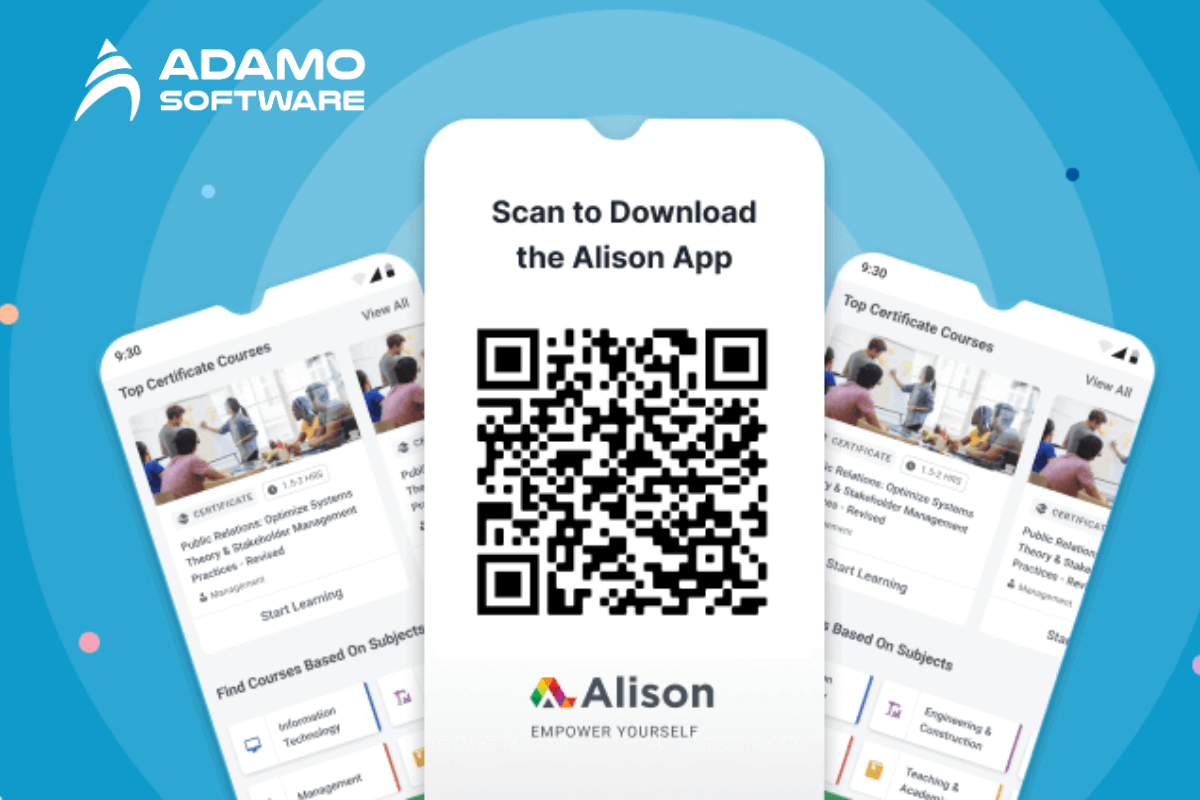
Provides free diploma and certificate courses across technology, business, health, and languages. The platform is ad-supported, which is how it maintains free access. Certificate printing requires a fee, but course completion and knowledge are free.
14. TED-Ed
Developed by TED Conferences, TED-Ed offers animated educational videos with accompanying lesson plans and discussion questions. Content is produced by educators and TED speakers. The platform is entirely free and covers a wide range of topics in an engaging, visual format.
15. Open Culture
Curates free educational media including university courses, audiobooks, films, and language lessons from institutions worldwide. Open Culture does not host content directly but aggregates links to free resources across the internet. No registration is required.
16. Saylor Academy
Offers self-paced courses with optional free certificates of completion. Courses cover business, computer science, English, and more. The platform is fully free with no premium tier, funded through the Saylor Foundation.
17. Class Central
An aggregator that catalogs free online courses from universities and platforms worldwide. Class Central does not host courses but provides a searchable database with user reviews and ratings. Users can compare courses across platforms (Coursera, edX, FutureLearn) from a single interface.
18. FutureLearn
Backed by The Open University and SEEK Ltd, FutureLearn offers courses from universities and specialist organizations. Free access includes course content for a limited time window (typically 5 weeks after the course starts). Unlimited access and certificates require a paid upgrade.
19. Codecademy
Specializes in programming and web development with interactive, browser-based coding exercises. The free tier covers basic courses in Python, JavaScript, HTML/CSS, and SQL. Advanced courses, career paths, and projects require Codecademy Pro ($34.99/month).
20. edApp
A microlearning platform designed for corporate training. It offers a free plan for up to 10 users with access to an extensive course library, gamification features, and analytics. The platform uses spaced repetition and bite-sized lessons optimized for mobile delivery. edApp is particularly relevant for businesses exploring mobile-first training solutions.
What It Takes to Build a Custom E-Learning Platform
The 20 platforms above serve general audiences. Businesses building e-learning platforms for specific industries, whether corporate training, professional certification, or K-12 education, need custom development that addresses domain-specific requirements.
Learning Management System (LMS) Backend
The core of any e-learning platform is the LMS, which handles course creation, user enrollment, progress tracking, assessment delivery, and certification. A production-grade LMS requires role-based access control (administrators, instructors, learners), content management with support for video, documents, quizzes, and interactive modules, progress tracking with completion criteria and learning path dependencies, and reporting dashboards for administrators to monitor learner engagement and outcomes.
The global LMS market is valued at $26.8 billion in 2025 (Source: Research and Markets, 2026), with 72% of organizations already using an LMS for competitive advantage (Source: eLearning Stats, 2026). Building a custom LMS rather than licensing an existing one makes sense when the business requires deep integration with existing systems, domain-specific assessment types, or branding and UX control that off-the-shelf solutions do not support.
AI-Powered Personalization
Generic course sequences do not retain learners. AI-powered personalization adapts content difficulty, recommends next courses based on learning history, and identifies knowledge gaps that need reinforcement. In 2025, Coursera introduced AI-powered challenge modules that dynamically adjust quiz difficulty based on individual performance, demonstrating the direction the industry is moving.
Adamo Software built an AI-integrated workforce management platform for the aviation industry in Australia. The system connects with leading e-learning platforms like HAS and LearnUpon, and uses AI to automatically generate and update datasets linking courses, certifications, and skill progress in real time. This architecture, where AI bridges learning content with organizational competency requirements, is directly applicable to any custom e-learning platform that needs to personalize training paths based on role requirements and individual progress.
Content Delivery and Streaming Infrastructure
E-learning platforms must deliver video content reliably across varying network conditions. This requires adaptive bitrate streaming that adjusts video quality based on available bandwidth, content delivery network (CDN) integration for global reach, offline download capability for learners in areas with inconsistent internet access, and DRM protection for premium or proprietary content.
Assessment and Certification Engine
Beyond simple multiple-choice quizzes, modern e-learning platforms require diverse assessment types including coding challenges (with browser-based execution environments for programming courses), peer-reviewed assignments, timed examinations with proctoring capabilities, and digital certificates with verification systems that employers can validate.
Recommended Tech Stack
Based on Adamo Software’s education and healthcare platform development experience:
- Frontend: React or Angular for responsive web interfaces, React Native for mobile apps
- Backend: Node.js or Python (Django) for course management and API logic
- Database: PostgreSQL for user and course data, MongoDB for flexible content structures
- Video: CDN-backed streaming with adaptive bitrate (HLS/DASH), or integration with services like Vimeo OTT or AWS MediaConvert
- AI/ML: Recommendation engines for personalized learning paths, NLP for automated quiz generation
- Cloud: AWS or Google Cloud for scalable compute, storage, and ML model hosting
- Authentication: OAuth 2.0, SSO integration for corporate deployments
- Analytics: Custom dashboards built on data warehousing (BigQuery or Redshift) for learner engagement metrics
Cost Considerations: Vietnam vs. Other Development Markets
Custom e-learning platform development costs vary significantly based on scope, feature complexity, and where the development team is located. The same platform built in the United States, Western Europe, Vietnam, or India can differ in cost by 3x to 5x due to differences in developer hourly rates.
Developer Hourly Rates by Region (2025-2026 Estimates)
| Region | Junior Developer | Mid-Level Developer | Senior Developer | Instructional Designer |
|---|---|---|---|---|
| United States | $75 – $120/hr | $120 – $180/hr | $180 – $250/hr | $50 – $100/hr |
| Western Europe | $60 – $100/hr | $100 – $150/hr | $150 – $200/hr | $45 – $80/hr |
| Eastern Europe | $30 – $55/hr | $55 – $80/hr | $80 – $120/hr | $25 – $45/hr |
| India | $15 – $30/hr | $30 – $50/hr | $50 – $80/hr | $15 – $30/hr |
| Vietnam | $18 – $35/hr | $35 – $55/hr | $55 – $90/hr | $15 – $30/hr |
Total Platform Development Cost by Scope
| Platform Scope | US / Western Europe | Eastern Europe | Vietnam / India |
|---|---|---|---|
| Basic MVP (course hosting, user management, simple quizzes) | $80,000 – $200,000 | $40,000 – $100,000 | $25,000 – $70,000 |
| Mid-range LMS (video streaming, progress tracking, certificates, mobile app) | $200,000 – $500,000 | $100,000 – $250,000 | $60,000 – $150,000 |
| Full-featured platform (AI personalization, live streaming, advanced assessments, gamification, wearable integration, admin analytics) | $500,000 – $1,200,000+ | $250,000 – $600,000 | $150,000 – $400,000 |
These are development costs only and do not include content creation, marketing, hosting, or ongoing maintenance. Content production adds another layer: a single custom e-learning module costs between $1,365 and $5,300 depending on complexity, animations, and interactivity level (Source: TTMS, 2025).
Why Vietnam Is a Competitive Option
Vietnam’s software development market offers a cost-to-quality ratio that positions it between India’s lowest price point and Eastern Europe’s mid-range. Several factors make Vietnam particularly relevant for e-learning platform development. Vietnam’s EdTech market reached $328 million in revenue in 2023 with a 15% year-over-year increase (Source: B-Company, 2025), meaning Vietnamese developers have direct market exposure to e-learning products, not just outsourcing experience. The Vietnamese government allocated approximately $200 million for digital learning infrastructure development as part of its National Digital Transformation Strategy (Source: Ken Research, 2025). Over 55% of Vietnam’s population is under 35, creating a large pool of tech-literate developers familiar with modern frameworks and AI tooling.
Adamo Software, based in Hanoi with 170+ engineers, operates at Vietnam-market rates while maintaining ISO 27001 and ISO 9001 certifications. The company’s aviation workforce management project, which integrates AI-driven learning paths with e-learning platforms like HAS and LearnUpon, demonstrates the type of enterprise-grade LMS integration that Vietnamese development teams can deliver at a fraction of US or European pricing.
Conclusion
The 20 free e-learning platforms reviewed here range from genuinely free resources like Khan Academy and MIT OpenCourseWare to freemium platforms like Coursera and edX that limit free access to audit mode. For individual learners, the choice depends on whether formal certification matters (choose Coursera, edX, or Google Digital Garage) or whether knowledge acquisition alone is sufficient (choose Khan Academy, MIT OCW, or Open Culture). For businesses, the $26.8 billion LMS market reflects the reality that general-purpose free platforms do not meet enterprise requirements for employee tracking, compliance training, or industry-specific curriculum. Custom e-learning platforms that integrate AI personalization with existing organizational systems, as demonstrated by Adamo Software’s aviation workforce management project, deliver the control, customization, and data integration that off-the-shelf solutions cannot.
Adamo – A trusted partner for providing an all-in-one eLearning platform
If you are searching for the best free e-learning platform to be built, do not think twice about approaching us. Adamo Software is one of the names that you can rely on. Adamo has developed workforce management and training platforms with AI-driven learning integration, including a system for the aviation industry that automatically links courses, certifications, and skill progress across e-learning platforms. Whether you need a corporate LMS, a MOOC-style course platform, or an AI-powered training system integrated with your existing HR infrastructure, Adamo Software’s engineering team builds education technology that scales.

 adamosoft.com
 (+84) 373 11 44 88