7 Best Communication Tools for Telehealth in 2026 (Compared)
Compare the top 7 HIPAA-compliant communication tools for telehealth, including video, async messaging, and RPM platforms. See features, pricing, and best use cases.
Telehealth has become popular for patients, which allows them to receive remote medical examination and treatment services instead of going directly to the healthcare facilities. Communication channels play an important role in supporting these services, helping patients connect with medical staff. By choosing suitable tools, healthcare facilities can maintain the quality of telemedicine services and communication effectiveness. So, which telehealth communication platforms that medical centers can use?
Through this blog post, you will find detailed information on the two main types of telehealth communication, benefits of these tools, and some most effective communication tools for healthcare workers. Besides, you will also know the top 7 telehealth communication platforms to consider. All of the information has been thoroughly researched and updated to the latest trends.
I. Two main types of communication tools for telehealth
Telehealth communication technology falls into two main categories: synchronous and asynchronous. Each serves different clinical scenarios and offers distinct advantages for healthcare delivery. Here is a closer look at both.
1. Synchronous type of communication tools for telehealth
Synchronous tools enable real-time exchanges between doctors and patients. These platforms facilitate immediate consultations, allowing providers to assess symptoms and make clinical decisions during the session. They require two parties to participate in the communication at the same time, creating an interactive experience like they are meeting face to face directly. Below are some cases of using this type of communication tool for telehealth.
- Urgent consultations: Healthcare facilities can use synchronous telehealth communication platforms when a patient encounters severe health conditions, such as chest pain, respiratory difficulty, or an allergic reaction.
- Direct diagnosis: Doctors can observe patient’s symptoms through the video; thereby assessing the patients’ health condition.
- Teletherapy: Individuals experiencing feelings of unease, sadness, or excessive stress can connect with mental health professionals through the video call. Teletherapy and virtual consultations are increasingly enhanced by artificial intelligence. Learn how AI in telemedicine is improving diagnostic accuracy and patient triage across telehealth platforms.
- Ongoing care and support: The synchronous communication tools enable doctors to give comprehensive patient care that does not require patients to go to the hospital.
In these scenarios, real-time telehealth platforms help physicians evaluate conditions and respond quickly. Patients benefit from the immediacy of live interaction, which builds trust and improves overall care satisfaction. Besides, immediate communication helps doctors provide accurate and timely advice, avoiding delays in health care. Some typical tools of this type include the Zoom for Healthcare, Teladoc Health, and Microsoft Teams for Healthcare. These technology communication solutions in virtual care support medical organizations in organizing online meetings, consultations and patient counseling.
2. Asynchronous type of technology communication solutions in virtual care
Unlike real-time platforms, asynchronous telehealth tools do not require simultaneous participation. Patients can submit questions or upload medical data at their convenience, and clinicians respond when available. Using this type of communication, patients may send questions or medical data and doctors will respond at the right time. This type of communication is especially useful in non-emergency situations, helping to improve healthcare efficiency without requiring immediate interaction.
Store-and-forward technology is particularly useful for chronic disease management: conditions like diabetes, hypertension, and heart disease benefit from ongoing but non-urgent communication between patients and care teams.. Many healthcare providers now rely on a dedicated virtual care platform to manage these ongoing patient interactions effectively. Besides, doctors can use this type to send test results or prescribe medications without calling or meeting with patients in person. Additionally, patients can ask questions about minor symptoms, medication side effects, or request care instructions without an immediate video call.
Thanks to the asynchronous type of telemedicine app development solutions, doctors and patients can save their time. Besides, pressure on face-to-face and emergency services can be relieved by handling less urgent issues via text or email. Some outstanding examples of this type include Epic, Cerner, Athenahealth, Medici, OhMD, Spruce Health, etc.
In general, choosing the right communication tool depends on the needs of each medical situation. By combining these two methods, you can optimize the effectiveness of telehealth, ensuring patients receive timely and accurate support.
II. Benefits of effective communication tools for telehealth
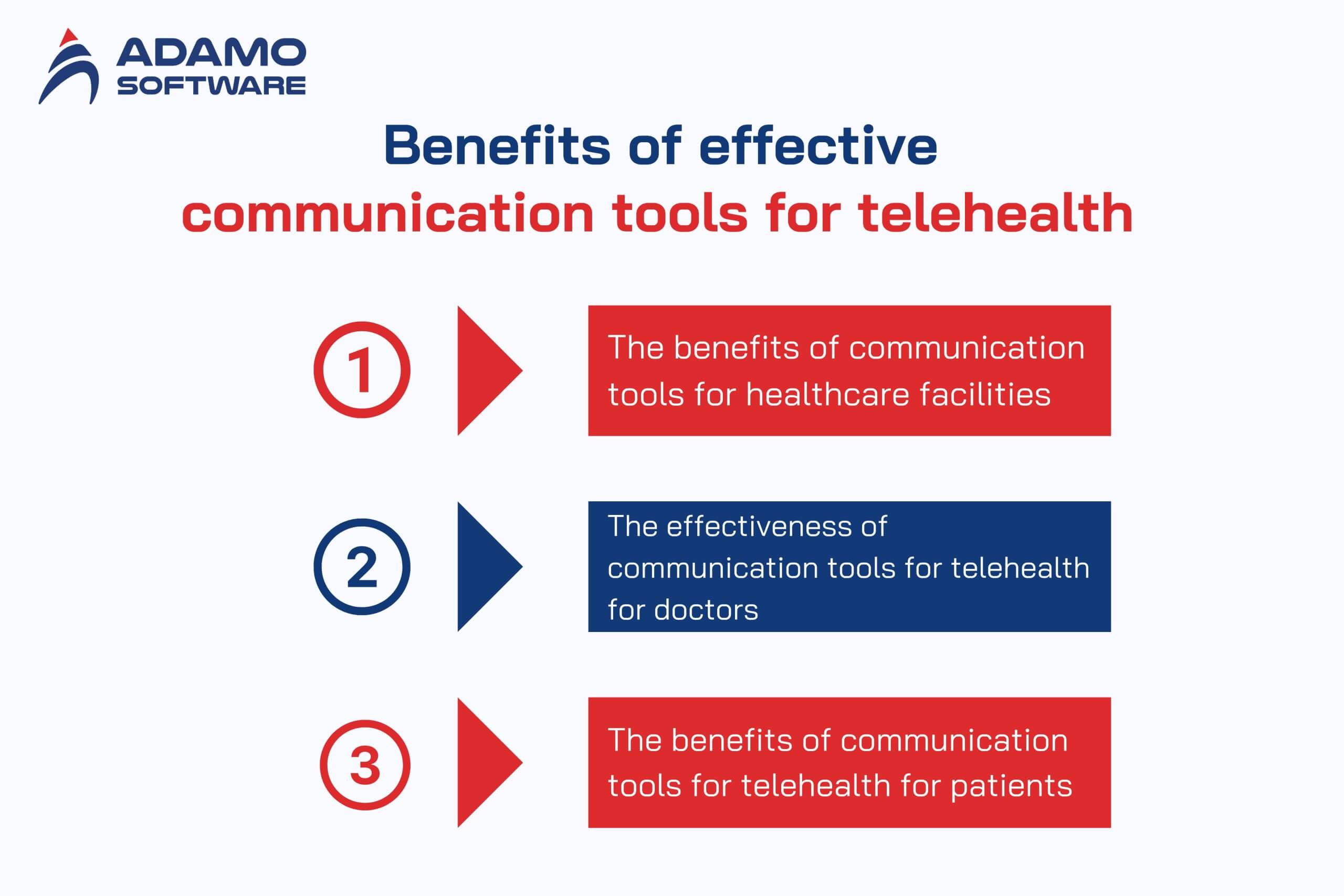
Effective telehealth communication platforms bring benefits to not only healthcare facilities but doctors and patients as well. Besides enhancing healthcare quality, these tools also help to optimize the healthcare facilities’ operating process.
1. For healthcare facilities
Thanks to telehealth communication platforms, healthcare facilities can optimize their operating process, reduce pressure, and enhance treatment effectiveness. Using these tools, hospitals and clinics can manage patients remotely without having to expand facilities or increase staff. They are especially useful for medical facilities in remote areas with limited resources.
Besides, the technology communication solutions in virtual care are also outstanding with their ability to integrate with the Electronic Health Records (EHRs). These tools allow medical centers to apply digital technology in the entire process of exchanging medical information. Thanks to this, healthcare facilities can reduce errors in managing medical records, prescribing drugs and tracking patient treatment history.
In addition, remote communication tools help hospitals reduce overload in outpatient departments. These tools help to reduce the pressure for healthcare facilities. The reason is that they allow patients to receive online consultations instead of going to the medical centers. Thanks to this, doctors can focus on more severe cases. Thus, the healthcare facilities can improve their service quality while optimizing operating costs.
2. For doctors
The telehealth communication platforms enable doctors to examine, treat and diagnose disease more effectively. These tools reduce administrative work and optimize the treatment process. Automated communication systems and electronic health records enable them to focus more on diagnosis and treatment. They will no longer have to take a lot of time recording and communicating with patients face to face. Thanks to this, they can enhance the treatment quality and medical services.
Additionally, as mentioned, some asynchronous communication tools for telehealth give physicians more flexibility in responding to patients. Thanks to these tools, doctors do not have to respond to patients immediately. Instead, they can record the video and process information as they arrange, without disrupting their work and affecting the treatment quality. This is especially useful for managing chronic patients, monitoring treatment progress, or handling follow-up appointments without the need for face-to-face meetings.
Moreover, effective telehealth communication platforms allow doctors to collaborate with other experts in the healthcare sector. When they encounter a hard case, they can consult with other doctors and healthcare providers through online meetings and medical sharing platforms. Thanks to this, they can improve the quality of diagnosis and treatment. This helps to improve work efficiency and enhance the ability to learn and update new medical knowledge.
3. For patients
The telehealth communication platforms are also beneficial for patients. Thanks to these tools, patients can access healthcare services more easily. They will not have to go directly to the healthcare facilities and wait until they can meet the doctors. Instead, with the communication tools for telehealth, they can receive remote medical advice via video call, text message or email. People living in remote areas, the elderly or patients with limited mobility may find these tools especially useful. This makes health care more convenient without interrupting work or daily activities.
Besides, thanks to the telehealth communication, patients can be more proactive in monitoring their health. Chronic disease tracking apps, medication reminders, and health information exchange platforms help patients stay on track with their treatment plans more effectively. In addition, patients may find it easier to share medical information with their doctors when needed thanks to the ability to store and access electronic health records.
Significantly, effective telehealth communication platforms help patients save time and healthcare costs. Patients will no longer have to travel far or wait in line. Instead, they can book an appointment online and receive consultation right at home. For those who need regular health care, this is an optimal solution to help them maintain their health without facing financial barriers or geographical distance.
III. Most effective communication tools for healthcare workers
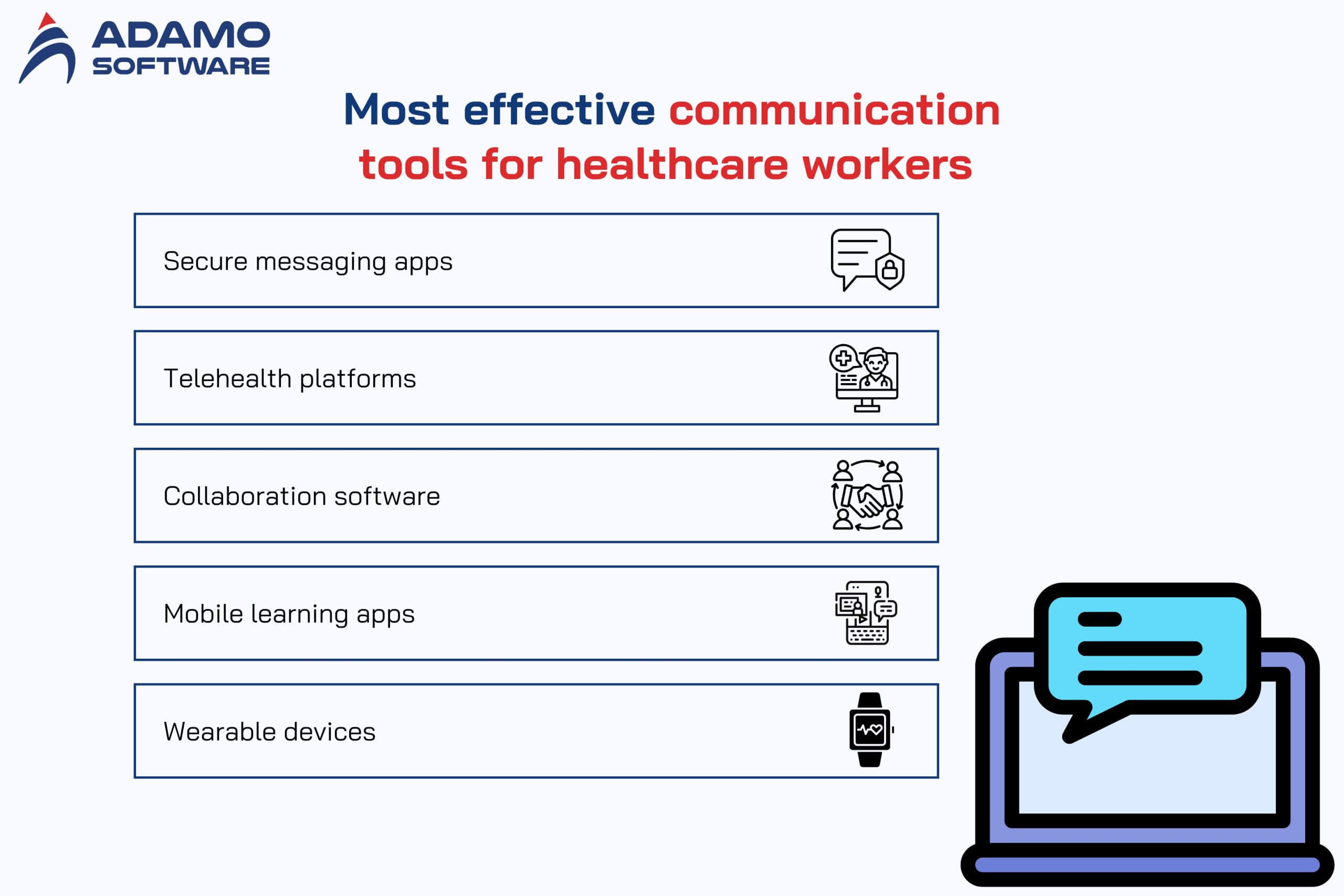
Thanks to technological advancements, healthcare staff can now use different digital communication in telehealth to exchange information quickly and safely.
1. Secure messaging apps
Secure messaging apps are among the communication tools that are popular among the healthcare sectors. These apps allow healthcare staff to exchange information quickly while ensuring compliance with security regulations like HIPAA. Using these apps, patients do not have to be worried that their messages with doctors, their data and illness are revealed or theft. The reason is that the secure messaging apps offer encrypted messaging, secure file sharing, and real-time communication platforms. Thanks to this, the patient data is always kept secure.
Below are some outstanding apps as digital communication in telehealth that you may want to refer to.
- Klara
If you need a comprehensive messaging platform, Klara will be one of your ideal choices. Some key features of this app include advanced patient messaging capabilities, robust care coordination workflows, and intuitive appointment management tools.
- TigerConnect
TigerConnect is a suitable app for healthcare providers. It allows them to enhance communication and care coordination. Thanks to this app, medical staff and patients can connect with each other through secure messaging, voice, and video calls.
- Spok
Spok is a secure communication and collaboration platform designed specifically for healthcare. Spok’s platform supports diverse communication channels, including secure messaging, voice calls, and video conferencing. Key features include message escalation for timely delivery and message history tracking for enhanced visibility.
2. Telehealth platforms
Telehealth platforms are also effective communication tools for telehealth. Some popular platforms include Doxy.me, Teladoc Health, and Amwell, which are integrated with the Electronic Health Records. They enable patients to connect with doctors and healthcare staff remotely through video calls, voice calls, and text messaging.
These platforms are ideal for remote patients, those needing follow-up appointments, or those with chronic conditions. Telehealth platforms can significantly improve healthcare delivery by expanding reach, enhancing access, reducing costs, and improving patient satisfaction. They can also assist in managing chronic conditions, monitoring vital signs, and delivering health education.
3. Collaboration software
A doctor does not work on their own to examine and treat patients. Instead, they have to work with other doctors and healthcare providers to make diagnosis and treatment plans.
Some software like Microsoft Teams, Slack, and Asana help healthcare teams work more efficiently by providing tools for task management, document sharing, and internal communication. Using this software, healthcare workers can easily coordinate between departments, track treatment progress, and optimize administrative processes. By focusing on communication and document storage, these tools help reduce errors, increase work efficiency, and improve the quality of healthcare services.
4. Mobile learning apps
Mobile learning apps provide medical documents, training courses and professional certifications to healthcare providers. These applications help improve clinical decision making, enhance expertise, and support better patient care. Below are some typical mobile learning apps that you can use.
- Medscape
Medscape is the leading online platform for physicians and healthcare professionals globally. It provides free access to the latest news, expert commentary, clinical tools, drug and disease information, medical podcasts, CME/CE activities, and more.
- UpToDate
UpToDate empowers clinicians with the most trusted evidence-based clinical information. With UpToDate, you can choose from various subscriptions and add-ons to access the most current information and enhance patient outcomes.
5. Wearable devices
Wearable devices are also the telehealth communication that benefit both healthcare providers and patients. Wearables such as smartwatches, biosensors, and personal health monitors play a key role in remote health monitoring and real-time medical data tracking. They help healthcare professionals monitor heart rate, blood oxygen levels, blood glucose, and other vital signs without requiring patients to be hospitalized.
Some popular health wearables include the Apple Watch (with ECG functionality), Fitbit, and BioIntelliSense BioSticker. These devices support early detection of abnormalities and improve chronic disease management.
Overall, the above communication tools for telehealth play an important role in optimizing communication and working processes in healthcare. By applying these tools, the healthcare system can operate more efficiently, and patient experiences can be enhanced.
IV. Top 7 communication tools for telehealth to consider
1. TigerConnect
As mentioned, TigerConnect is among the secure messaging apps of the telehealth communication platforms that you can refer to. It helps doctors and healthcare staff connect and exchange data quickly and securely. The app supports real-time messaging, voice and video calling, and integrates with electronic health records (EHR) systems to ensure a continuous flow of information.
With data encryption and HIPAA compliance, TigerConnect helps minimize the risk of medical information leakage while improving work efficiency through flexible communication. Thanks to this, the app can improve the quality of coordination within the hospital and optimize patient care, minimize errors, and speed up response times in emergency situations.
2. Podium
Podium is also among the communication tools for telehealth. It helps healthcare facilities effectively connect with patients through messaging, online feedback, and digital payment. This system supports two-way messaging, making it easier for doctors and patients to communicate without the need for traditional phone calls.
In addition, Podium helps collect feedback from patients through online reviews, thereby improving the reputation and quality of medical services. Another important benefit of this platform is the integration of online payments, helping patients pay their medical bills quickly and conveniently.
3. Telmediq
Telmediq is an advanced advanced clinical messaging and communication platform designed to optimize the flow of information in healthcare settings. It supports secure, real-time messaging, voice and video calling, and integrates with electronic health records (EHRs) and hospital management systems.
One of the key advantages of Telmediq is its ability to coordinate calls between doctors, nurses, and clinical staff, reducing wait times and improving efficiency. In addition, the platform supports emergency alerts and notifications, helping healthcare teams respond faster to critical situations.
4. Change Healthcare
Change Healthcare provides digital solutions to optimize payment processes, manage patient data, and improve the operating efficiency of healthcare facilities. One of Change Healthcare’s strengths is its ability to integrate with electronic health records (EHRs), allowing for accurate and secure access and management of patient data. In addition, the platform also uses AI to analyze medical data, supporting doctors in making more effective clinical decisions.
5. Relatient
Relatient helps healthcare providers improve the patient experience by automating online appointment reminders, registration, and payments. The system offers features such as appointment reminders via text, email, or phone, helping to reduce no-show rates and optimize patient scheduling. In addition, Relatient also supports contactless online registration, allowing patients to complete procedures before their appointment, saving time and reducing pressure on healthcare staff.
6. ZingIt
ZingIt helps healthcare facilities enhance their patient engagement through automated messaging, appointment reminders, and online review management. The system reduces patient no-shows by sending reminder messages in advance of appointments and supports flexible rescheduling. Additionally, ZingIt helps clinics and hospitals build credibility by encouraging patients to leave online reviews, which can attract new customers.
7. PerfectServe
PerfectServe helps healthcare organizations optimize the flow of information between doctors, nurses, and other healthcare professionals. The system offers secure messaging, voice calling, video conferencing, and automated call dispatch, helping to shorten response times and improve the quality of patient care.
One of the highlights of PerfectServe is its intelligent routing technology, which allows messages or calls to be sent directly to the right person based on their schedule and role within the hospital system. Additionally, the platform integrates with electronic health records (EHRs) and other healthcare systems to ensure that information flows are always up-to-date and accurate.
Overall, choosing the right communication tool can help optimize the telemedicine process, ensure information security, and enhance the experience for both doctors and patients.
Effective communication in telehealth also depends on seamless access to patient records. Implementing a proper EHR solution for telemedicine ensures that all clinical data is available during virtual consultations.
V. Ready to improve your healthcare communications?

Are you ready to improve your communication tools for telehealth? Are you looking for a partner to help you with your idea? If yes, Adamo Software can be your ideal choice. Adamo Software offers a complete telehealth telemedicine solution designed to support both synchronous and asynchronous communication for healthcare organizations worldwide. Here’s how we can support upgrading medical communication systems.
- Developing a secure messaging platform
- Integrating telehealth solutions
- Applying AI in data analysis and automation
- Improving patient experience
- Ensuring security and regulatory compliance
- Integrating with EHR systems
Still hesitating whether to choose Adamo Software? Let’s contact us for more detailed information!

 adamosoft.com
 (+84) 373 11 44 88