
Challenges of Healthcare Software Compliance in Australia – And How to Overcome Them
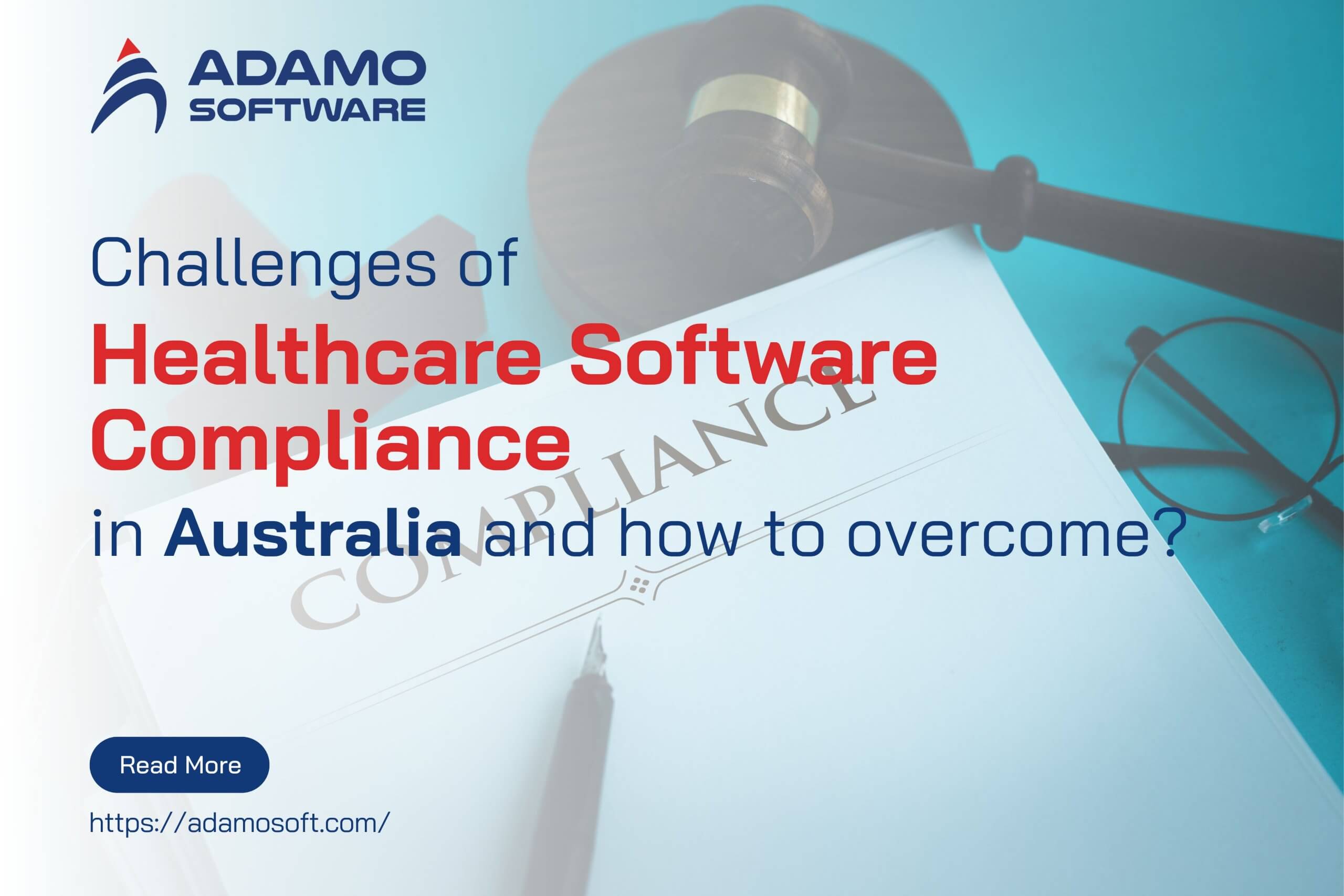
What healthcare software compliance in Australia actually requires: TGA and SaMD rules, the Privacy Act and the Australian Privacy Principles, interoperability standards, the 2024 to 2026 changes, and practical ways to meet them without overspending.
Healthcare software compliance in Australia is the work of proving that a digital health product is safe, private, and interoperable before it touches a patient or a clinician. It is harder than general software compliance for one reason: much healthcare software is regulated as a medical device. Under the Therapeutic Goods Act 1989, the Therapeutic Goods Administration (TGA) treats software as a medical device (SaMD) when it meets the Act’s definition, which means it carries obligations that a normal app never faces. Getting this wrong causes launch delays and rework at best, and regulatory action at worst.
Key Takeaways
- Much healthcare software is a Software as a Medical Device (SaMD) and must be classified under TGA rules and included in the Australian Register of Therapeutic Goods (ARTG). The current SaMD classification rules came into full effect on 1 November 2024.
- Health information is sensitive information under the Privacy Act 1988 and its 13 Australian Privacy Principles. The Privacy and Other Legislation Amendment Act 2024 raised penalties and tightened security obligations.
- AI is not exempt. In February 2026 the TGA confirmed that AI-based medical software is regulated inside the existing SaMD framework, and flagged AI scribes that suggest diagnoses or treatments as potential medical devices.
- The cost and talent burden is the practical bottleneck. A quality management system, privacy by design, and an experienced delivery partner are the levers that keep compliance affordable.
Australia is midway through a rapid digitisation of health records and clinical workflows, and the regulatory framework has moved with it. Between 2021 and 2026 the TGA reformed how it regulates software, and in December 2024 Australia passed its first substantive privacy reforms since 2012. For any team building healthcare software for the Australian market, the rules that applied two years ago are not the rules that apply now. This guide sets out what compliance covers, where the hard parts are, and how to meet them.
What Healthcare Software Compliance in Australia Covers
Four regimes sit under the single phrase healthcare software compliance. A compliant product satisfies all four, not just the one a team is most comfortable with.
TGA regulation as a medical device. The TGA regulates SaMD under the Therapeutic Goods Act 1989. Classification rules sit in Schedule 2 of the Therapeutic Goods (Medical Devices) Regulations 2002 and follow the International Medical Device Regulators Forum (IMDRF) framework, sorting software from Class I to Class III by the harm it could cause through incorrect information. The current SaMD classification rules took full effect on 1 November 2024, after a transition period, and regulated software must be included in the ARTG before supply.
Privacy and data protection. The Privacy Act 1988 and its 13 Australian Privacy Principles (APPs) govern how personal information is handled, and health information is treated as sensitive information with stricter rules on collection, use, and disclosure. The Notifiable Data Breaches scheme has required reporting of serious breaches to the Office of the Australian Information Commissioner (OAIC) since 2018.
Interoperability. The Australian Digital Health Agency (ADHA) pushes for systems that exchange data cleanly. In practice that means building to HL7 FHIR and being able to connect with national infrastructure such as My Health Record.
Clinical and quality standards. SaMD work is expected to follow recognised standards: ISO 13485 for a medical-device quality management system, ISO 14971 for risk management, and IEC 62304 for the software lifecycle. These are the evidence base an auditor looks for.
The Main Compliance Challenges
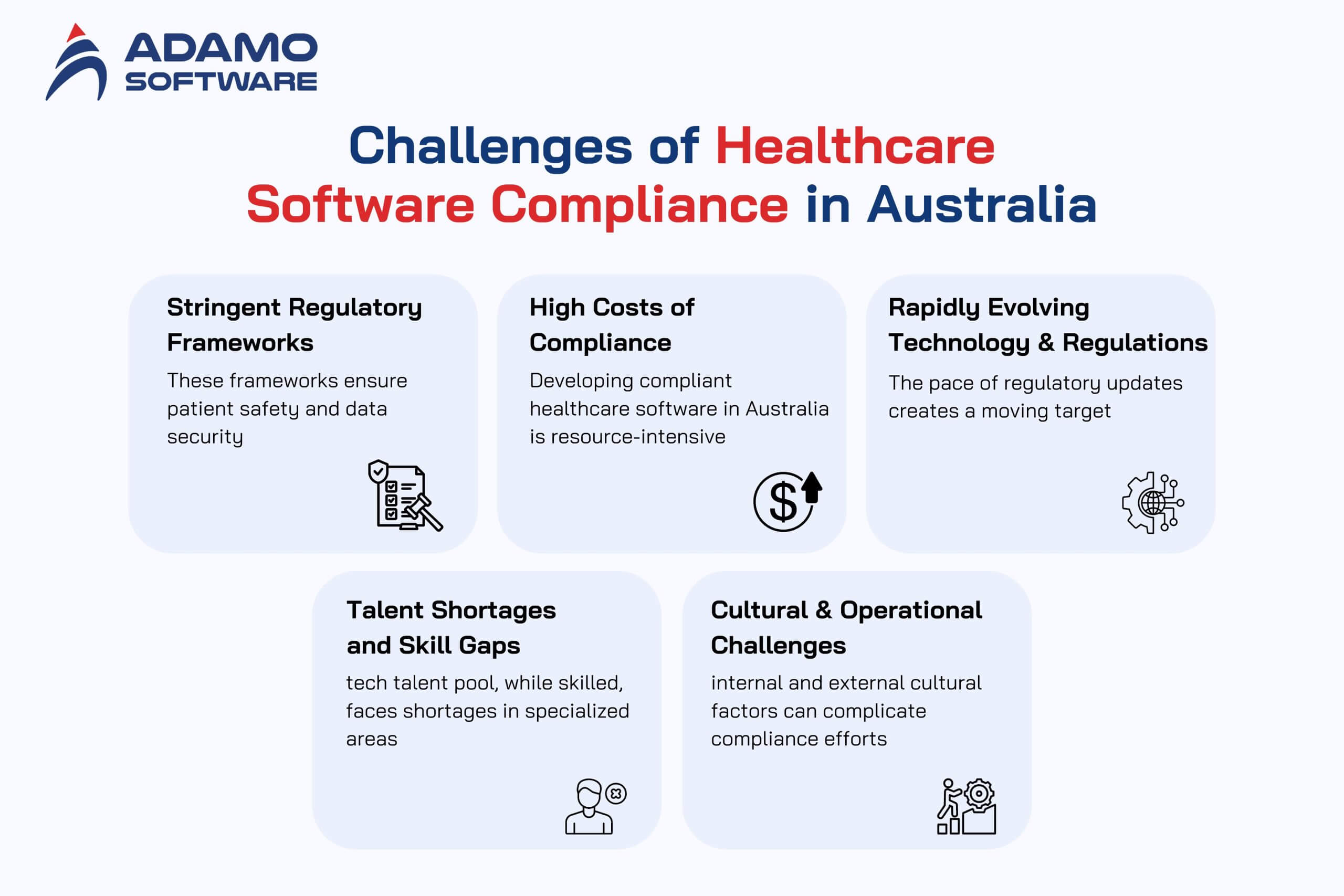
1. Deciding Whether Your Software Is a Medical Device
The first and most consequential question is whether the product is SaMD at all, because the answer sets every obligation that follows. The TGA looks at intended use and clinical effect, not the technology. Software that diagnoses, screens, monitors, or recommends a treatment is likely in scope, while a pure lifestyle or administrative tool may not be. Misjudging this early is the most common cause of launch delays and rework.
2. Privacy, and a Higher Bar Since December 2024
The Privacy and Other Legislation Amendment Act 2024 received Royal Assent on 10 December 2024 and raised the stakes for anyone holding health data. It gave the OAIC new mid-tier civil penalty powers, introduced a statutory tort that lets individuals sue for serious invasions of privacy, and strengthened APP 11 so that reasonable security steps now explicitly include both technical and organisational measures. New transparency requirements for automated decision-making follow, with obligations taking effect on 10 December 2026, which matters for any healthcare software that uses AI to influence a decision. Further reforms are expected through 2026, so privacy is a moving target, not a one-time checkbox.
3. Keeping Up With Change, Especially AI
Regulation now moves almost as fast as the technology. In February 2026 the TGA updated its guidance to confirm that AI-based medical software is regulated within the existing SaMD framework rather than a separate AI regime, and specifically flagged AI-powered clinical scribes that suggest diagnoses or treatments as potentially meeting the medical device definition. Any team adding AI features to a healthcare product needs to re-check classification when it does, because a feature that was administrative yesterday can become regulated today. This is one reason our overview of AI in the EHR stresses human oversight and auditability.
4. Cost and Specialist Talent
Compliance is resource-heavy. It calls for people who understand both healthcare regulation and software engineering, plus rigorous testing, security review, and post-market maintenance as rules evolve. That combination is scarce and expensive to hire in Australia, and for smaller providers the cost can be the difference between shipping and stalling. This is where delivery strategy, not just regulatory knowledge, decides the outcome.
How to Meet Compliance Without Overspending
The goal is to build compliance into the process rather than bolt it on at the end, where it is most expensive. Four moves do most of the work.
- Classify early. Determine SaMD status and likely class before design, so ARTG obligations and evidence requirements shape the build from day one instead of forcing a rebuild later.
- Stand up a quality management system. Work to ISO 13485, ISO 14971, and IEC 62304 from the start. Retrofitting a QMS and risk file onto a finished product is far slower than building with them.
- Design for privacy and security. Meet APP 11 with encryption, access control, and both technical and organisational safeguards, and treat health data as sensitive by default. Given the higher penalties since 2024, this is no longer optional hygiene.
- Test compliance continuously. Fold security, interoperability, and usability checks into each sprint rather than a single pre-launch audit, so problems surface while they are cheap to fix.
Building all of this in-house is ideal but costly. Many Australian providers close the gap by partnering with an experienced delivery team, which is also a practical answer to the talent and cost pressure above. Our guide on outsourcing healthcare software development covers when that model works and when it does not.
Where an Experienced Delivery Partner Fits
An outsourcing partner earns its place when it already understands Australian healthcare workflows and the compliance obligations around them, rather than learning them on your project. Adamo Software builds healthcare software for the Australian market, and a few of those engagements show the compliance-sensitive nature of the work.
- PlanCare is an aged care and NDIS plan-management app that gives elderly participants and their families real-time visibility over care budgets and approved providers, a domain that sits squarely inside privacy and aged care obligations. It won a 2025 Future of Ageing Award for Technology.
- My Emergency Doctor involved telehealth operations and consultation data analytics, turning clinical and billing events into reporting for hospitals and B2B healthcare clients, where data handling and accuracy are compliance concerns in themselves.
- A confidential Australian medico-legal assessment platform connects examinees, doctors, and legal teams for independent medical assessments, with document workflows and a full audit trail built for court use, which is compliance-critical by design.
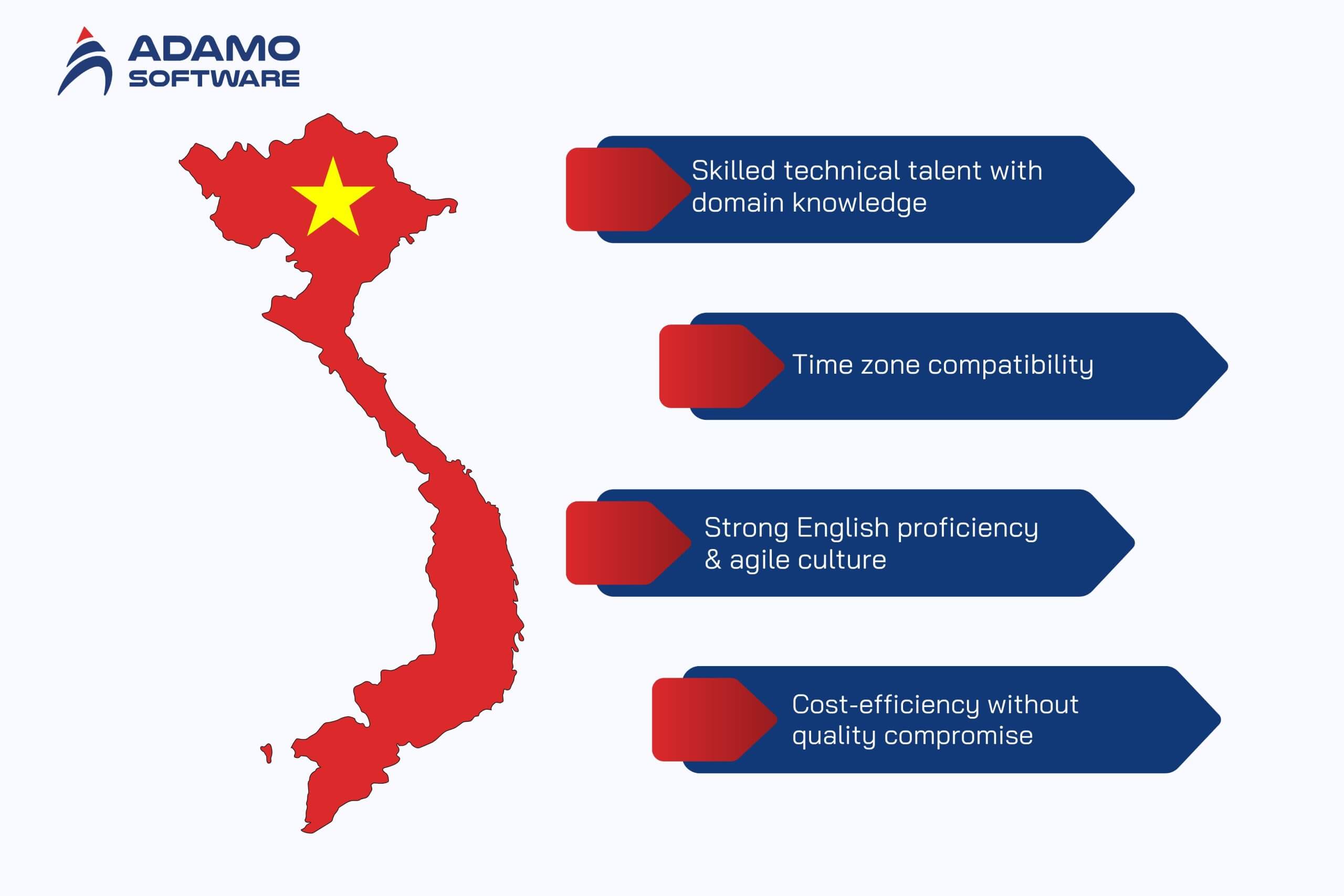
Beyond domain experience, Vietnam-based delivery suits Australian teams for practical reasons. Vietnam runs on GMT+7, three to four hours behind eastern Australian time, so working hours overlap for real-time collaboration rather than overnight handoffs. Teams work in English and in agile cycles, and engineering costs are materially lower than hiring the same specialist skills locally in Australia, which frees budget for compliance consultants and clinical validation without cutting software quality. This is the positioning Adamo works to: Australian-facing delivery, engineered in Vietnam.

Conclusion
Healthcare software compliance in Australia is demanding, but it is navigable when it is planned rather than discovered. The core is knowing whether your product is a SaMD under the TGA, meeting the Privacy Act and APP obligations that tightened in December 2024, building to FHIR for interoperability, and following ISO 13485, ISO 14971, and IEC 62304 as your evidence base. The teams that manage it treat compliance as a design input from day one and pair regulatory knowledge with the right delivery model, so that meeting the rules strengthens the product instead of slowing it down.
From SaMD classification and privacy by design to FHIR interoperability, Adamo Software builds healthcare products that meet Australian obligations without blowing the budget. Explore our Healthcare Software Development services to see how we deliver compliant, high-quality software.

 adamosoft.com
 (+84) 373 11 44 88